

Founder perspective · September 25, 2026
AI should help us protect the places we call home
GroundWorx founder Brad David on why environmental AI should give people earlier, clearer evidence to protect water, food systems and communities — not take decisions away from them.
Brad David · Founder & CEO, GroundWorx
The question worth asking
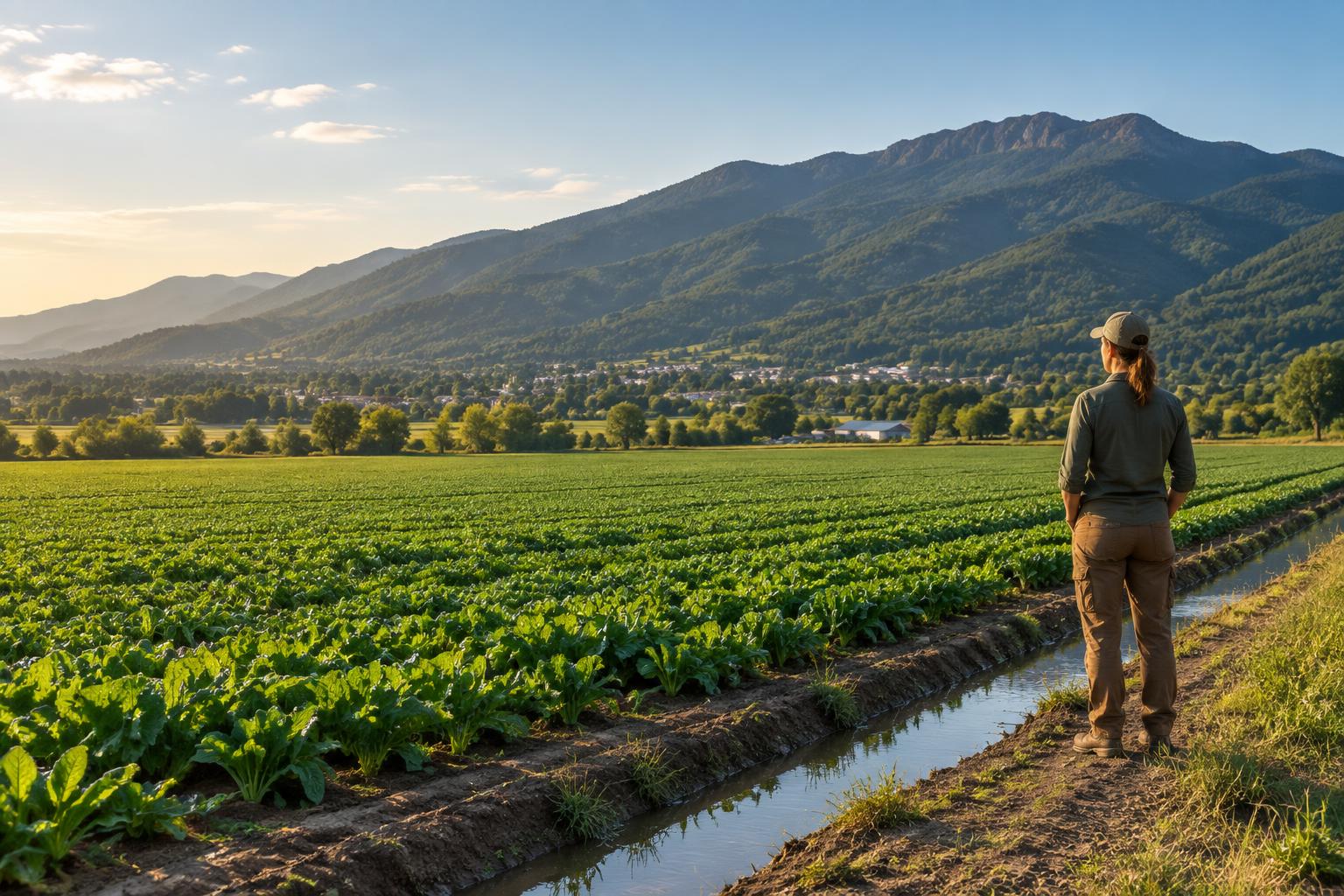
When people ask whether AI will help humanity or hurt it, I think about the people responsible for a place: the grower watching a crop through a dry summer, the superintendent managing a finite water allocation, the crew caring for a stand of mature trees, and the community living near a fire-prone landscape. They don't need a machine to replace their judgment. They need to see what is changing early enough to act.
That is the purpose behind GroundWorx. We are building physical-world environmental intelligence: measurements from the ground, interpreted in the context of weather and place, turned into useful signals for the people who care for land. GAIN — the GroundWorx Autonomous Intelligence Network — is meant to make human decisions more informed, not make human stewardship obsolete.
Protecting a home starts before the warning is visible
A catastrophic wildfire is not just a line on a risk map. It threatens homes, livelihoods, watersheds and the people who respond to it. Earlier detection could give those people more time, but no sensor network can promise to prevent every fire. The honest goal is to identify developing risk and possible fire signatures sooner, and get that information to the people who can decide what to do.
GroundWorx's emerging iQ Fire Station concept is being developed around that need. Its planned sensing architecture brings together ground-level fuel moisture with atmospheric, smoke and other fire-related signals. It is a development roadmap, not a deployed promise of fire prevention. GAIN's role is to help turn those observations into timely, interpretable alerts while trained responders and land managers remain in charge of action.
Water and food security begin beneath the surface
Water stress is often visible only after a landscape or crop has already started to suffer. Applying more water everywhere is expensive and can be wasteful; applying too little in the wrong place can put a harvest, a sports field or a living asset at risk. The better question is what this soil, at this depth, in this location actually needs next.
Across nine years, GroundWorx has collected more than 700 million environmental observations. Those are observations, not 700 million proven outcomes or a guarantee of predictive accuracy. Their value lies in the context: repeated measurements of root-zone conditions, interpreted with weather and site history, can help reveal patterns that a periodic inspection might miss. That foundation can support more precise irrigation decisions and, over time, help the people responsible for farms and landscapes use scarce water with greater care. Protecting water is inseparable from protecting the systems that grow food and sustain communities.
Keep the human in the decision
A useful AI recommendation should tell an operator what was measured, what was inferred, what may happen next and how confident the system is. It should be possible to question it, adjust it or override it. The person with local knowledge — whether an agronomist, grower, groundskeeper or fire professional — must remain accountable for the call.
This is the direction we are taking with GAIN: predictive intelligence with boundaries set by people. It can help surface a dry zone before a plant shows stress, flag conditions worth investigating, or explain why a watering cycle should wait. It is a tool for extending a steward's reach across more ground and more hours of the day, not a substitute for their experience.
The best future for AI is not one where it claims to know the land better than the people living and working on it. It is one where those people have better evidence, earlier warnings and more time to protect what matters. That is the kind of AI GroundWorx is here to build.