Championship conditions

Firm, consistent surfaces without guessing at the hose.

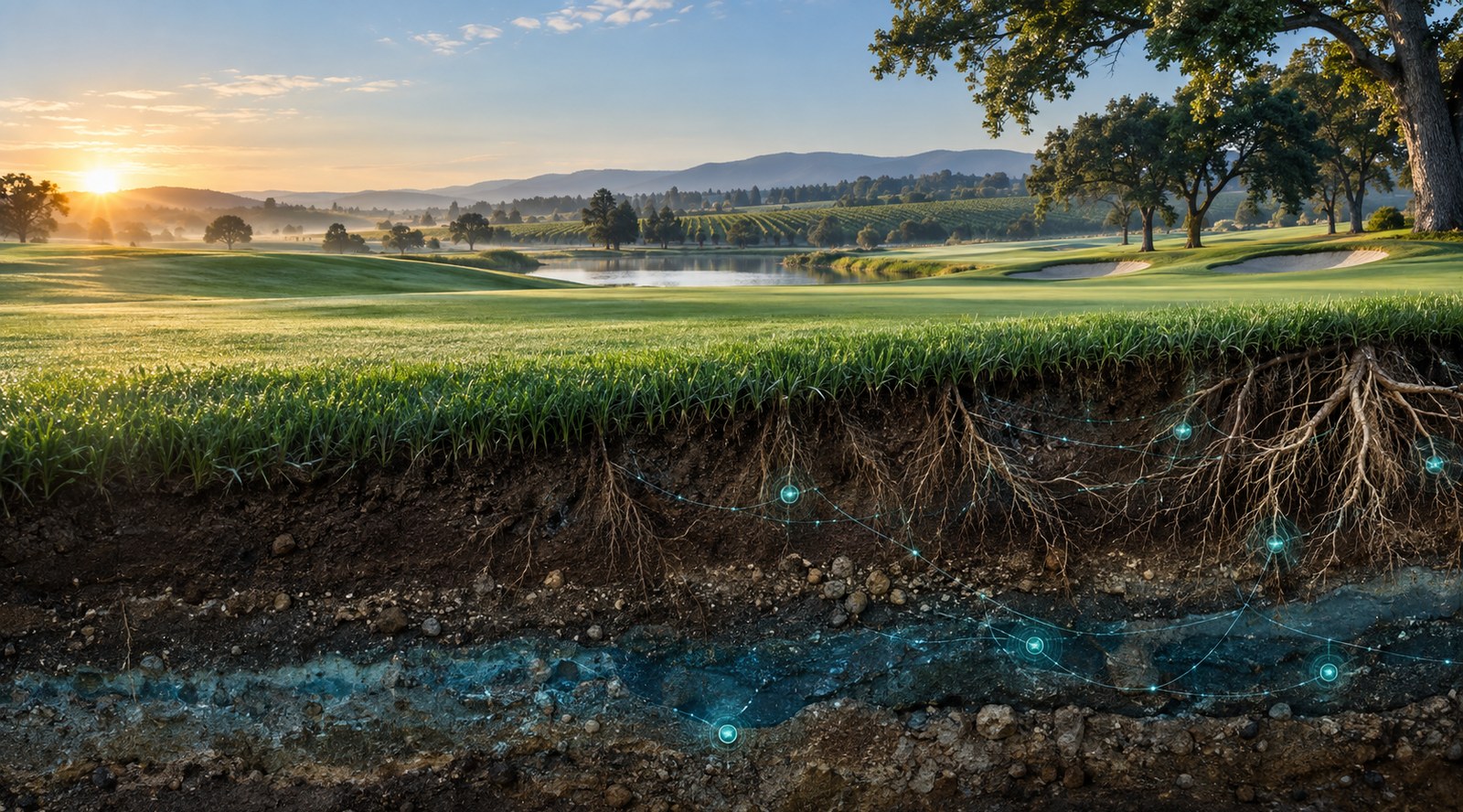
Superintendents run the tightest tolerance in turf. GroundWorx brings root-zone intelligence to the entire course: GX-1A sensors with iQ SmartWells for fairways and common areas, and invisible GX-1F Flex Sensors for the trees that define its character. Hand-watering, syringe cycles, overnight run times, and tree care follow measurement instead of memory.

Golf managed with GroundWorx

Golf only · Global estimate · 38,000 courses worldwide

Estimated opportunity

Water on the world’s golf courses. Irrigating only what the root zone demands.

Applying the conservative GCSAA U.S. national median to global golf models ~584.3 million gallons potentially conserved per day, annualized — assuming a 25% reduction through GAIN.

Potential gallons conserved · golf courses worldwide · estimated

All 38,000 golf courses worldwide · cumulative since October 9, 2026 · 00:00 UTC

~213.3 billion

Potential annual gallons conserved across 38,000 golf courses worldwide

GAIN combines root-zone moisture, salinity, temperature, and weather intelligence to predict irrigation need — helping crews avoid unnecessary watering while protecting turf health.

See GAIN’s predictive intelligence
Global golf courses
38,000Modeled worldwide baseline
Gallons / facility / year
~22.45MGCSAA U.S. median · 68.9 acre-feet
GAIN savings opportunity
25%Potential daily reduction
Water to the root-zone need
Predictive GAINSoil intelligence + weather context

Benchmark: GCSAA Golf Course Environmental Profile, 2025 Water Use and Conservation report (2024 U.S. national median): 68.9 acre-feet per facility per year × 325,851 U.S. gallons/acre-foot ≈ 22.45 million gallons/year. This is ~62,000 gallons/day across 365 days (roughly 62,000), or ~125,000 gallons per active watering night assuming 180 nights/year; that seasonal schedule is illustrative, not a GCSAA finding.

Illustrative global extrapolation: 38,000 courses × ~22.45 million gallons/year × 25% potential reduction ≈ 213.3 billion gallons/year; 584.3 million gallons/day, or ~6,763.25 gallons/second. The ticker uses the annual benchmark spread evenly over 365 days, not the active-night rate. A U.S. median extrapolated worldwide is not a measured global average. This is potential water conserved, not measured live water use, water already conserved by GroundWorx, or guaranteed savings. Actual irrigation and savings vary by course, climate, and season.

GAIN / Water savings estimator

Estimate your golf water opportunity

West: $7.50 / 1,000 galCentral: $3.75 / 1,000 galEast: $5.25 / 1,000 gal

US water rate region

1 course
120

Baseline annual use

22.5M gal

Estimated irrigation per year

Water conserved (25%)

5.61M gal

Modeled annual gallons conserved

Annual utility cost savings

$42,094 / yr

West · $7.50 per 1,000 gal

Estimate only, not a quote or guarantee. The 25% reduction shown here is the typical ROI we expect from either the Par Package (20/10 config: 20 iQ SmartWells and 10 GX-1A sensors) or a direct purchase of 18 sensors — both configs reach 25% easily. Basis: GCSAA Golf Course Environmental Profile U.S. median: 68.9 acre-feet (~22.45M gal) per facility per year. Savings use a 25% reduction benchmark; annual utility savings use the selected modeled US regional water rate (West: $7.50 per 1,000 gallons), not a local utility quote. Map zones are schematic, not state-level service boundaries. Sources: GCSAA, USDA/USGS, and university extension irrigation benchmarks for water use. Actual results depend on climate, soil, water source, local utility rates, and current practices.

Get a customized sensor plan

Learn the location. Move the intelligence.

Target release · Q4 2026

iQ SmartWell

An operational breakthrough for the course: sample fairways and common areas with a sensor in a SmartWell, establish each location’s baseline, then move wells where new learning is needed and return sensors for recalibration.

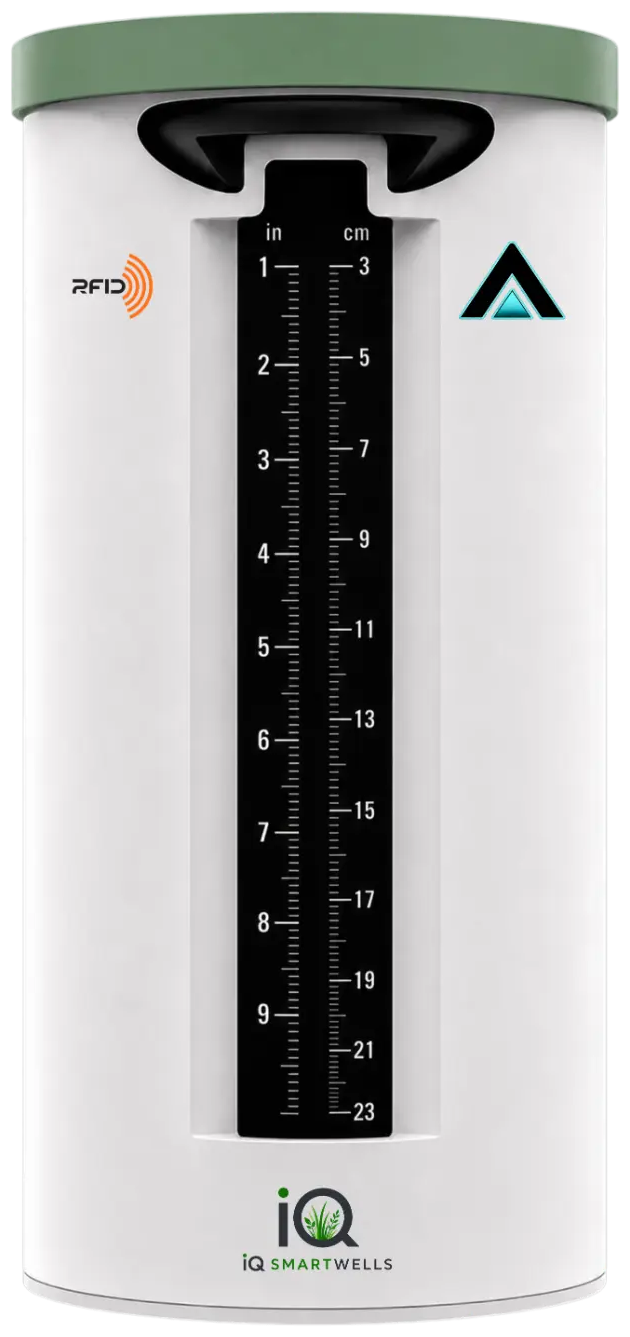
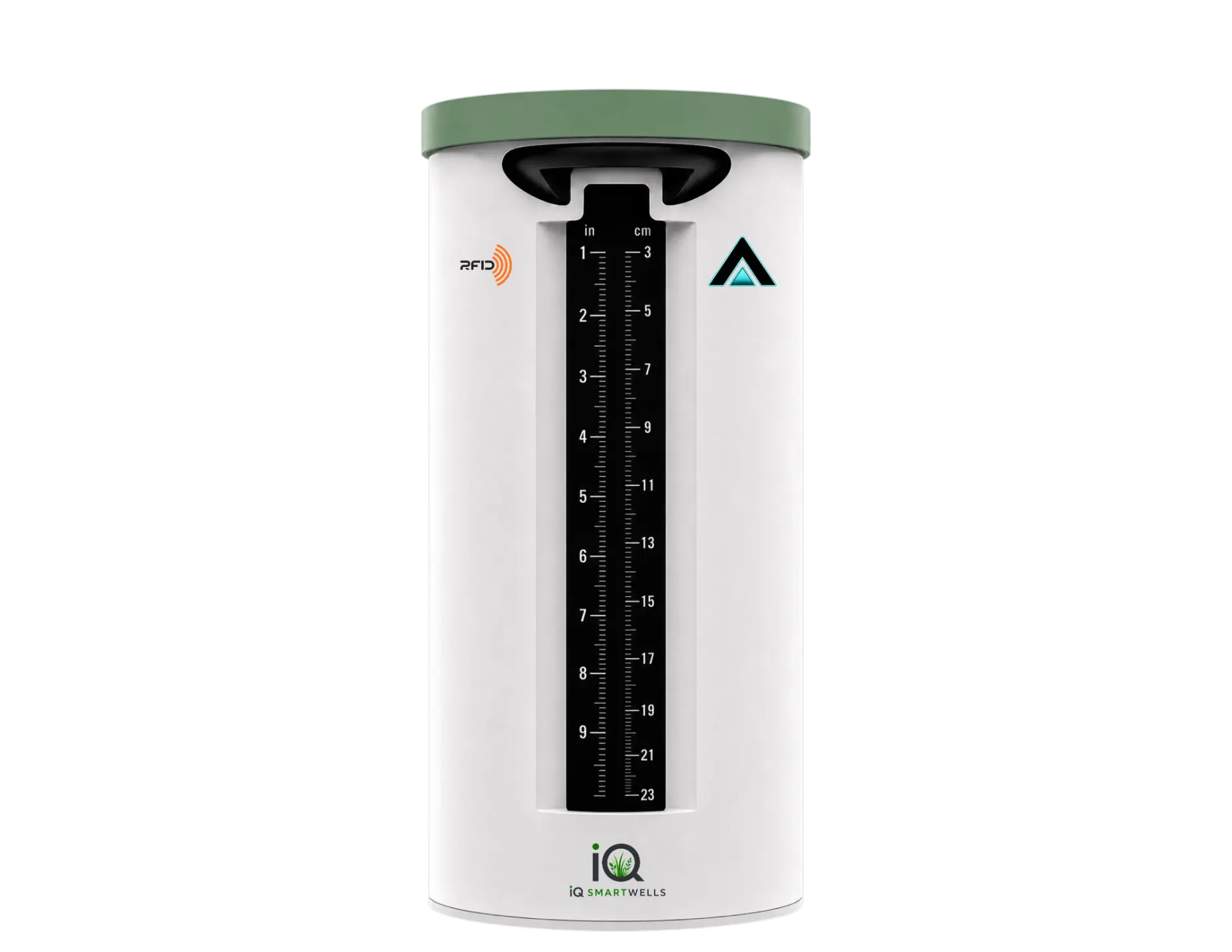
iQ SmartWellsiQ SmartWell relocatable subterranean sleeve with flush green top and depth calibration markings
Depth calibration markings. Tool-free sensor insertion.

01 / FLUSH SUBTERRANEAN SLEEVE

A baseline first. A learned location next.

Every location starts with a sensor in a SmartWell collecting initial data. Once the 20 SmartWell locations are predictable, wells can move to sample new ground. The sleeve sits flush so mowers and turf equipment can pass over it; depth markings and tool-free sensor insertion support each sampling visit.

02 / RFID + BLE AUTO-PAIRING

Keep the well. Bring the sensor back.

At volatile locations, the well stays in place while the sensor is stored safely elsewhere and returned a couple of times a year for recalibration. On each return, RFID instantly identifies the sensor and auto-pairs via Bluetooth Low Energy (BLE) — no manual QR scanning or serial-number entry.

Why it is different

A traditional well holds a sensor. A SmartWell runs a program.

Hardware economics

GroundWorx SmartWell

One-to-many economics. Twenty-plus active SmartLocations with half the sensor hardware — the same sensor samples many locations over time.

Traditional well deployment

A strict 1-to-1 lock. Twenty wells mean twenty sensors buried underground, so every new location means buying and burying another sensor.

Surface presence

GroundWorx SmartWell

Flush beneath the surface. Mowers and turf equipment roll right over it, with nothing visible to break or eyesore to explain.

Traditional well deployment

Wells stay physically visible to everyone on the grounds — something people see, walk around, and can damage.

Role of the well

GroundWorx SmartWell

An active calibration dock. RFID/BLE auto-pairing on every insertion, SmartLocations generated from what the well learns, and sensors stored safely between periodic recalibrations.


Traditional well deployment

A passive plastic cup whose only job is protecting a sensor while it sits in the ground.

Sample. Learn. Recalibrate.

  1. 01

    Sample & Learn

    Start with a sensor in a SmartWell. Collect the initial root-zone data and establish a baseline until each of the 20 locations is predictable.

  2. 02

    Move & Expand

    Once the 20 locations are predictable, wells can move to sample new locations. GAIN maintains the learned SmartLocations as predictions after sensing hardware moves on.

  3. 03

    Return & Recalibrate

    At volatile locations, leave the well in place. Store the sensor safely elsewhere and return it a couple of times a year for recalibration — without leaving a sensor in every well.

20 learned locations. No need to leave 20 sensors in the ground. After baseline learning, sensors can be stored safely elsewhere between recalibration visits. Sensor-free SmartLocations are AI predictions, not live measurements. The iQ Capsule, under development, will eventually collect data on its own without a SmartWell.

Plan a SmartWell pilot

What you are up against

  • Members judge the course on firmness and green speed every single day.
  • Water budgets and local restrictions tighten faster than crews can adapt.
  • Localized dry spot and salinity build-up show up long after the damage starts.

What changes

Water
Cut irrigation run times where the root zone is already at target, instead of watering the whole zone to protect one corner.
Playability
Hold firmness through tournament weeks with moisture trends per green rather than a single spot check.
Labor
Send hand-watering crews to the locations that actually need attention each morning.
Course trees
Protect mature trees and signature canopy with GX-1F deep-root sensing. Catch moisture stress below ground before it becomes visible above it, without adding visible hardware to the course.

Typical deployment

What goes in the ground

  • GX-1A sensors with iQ SmartWells for fairways, approaches, and common areas
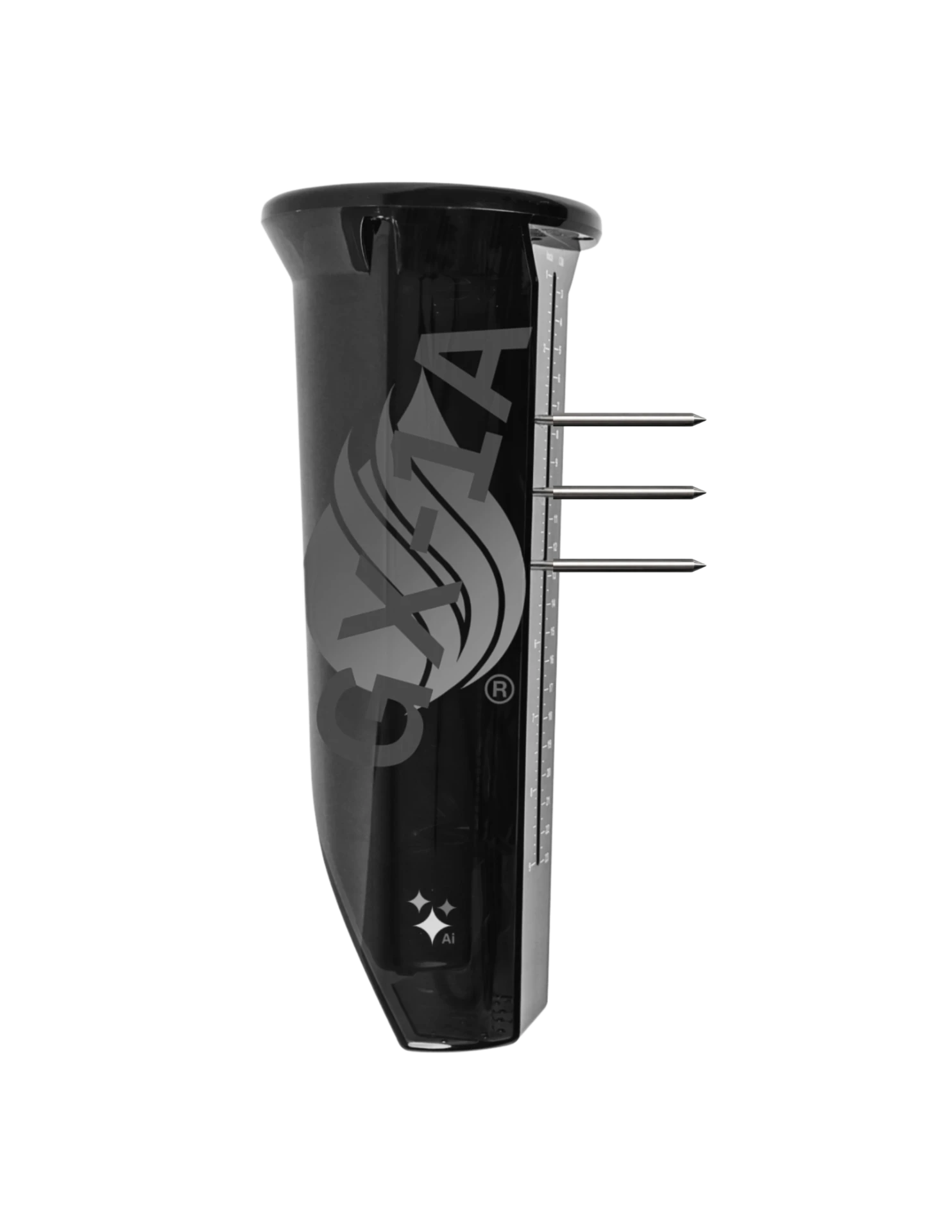
  • GX-1F Flex Sensors for golf-course trees — standalone, wireless, and autonomous; works with or without iQ SmartWell
  • GAIN alerts and recommendations with AI weather intelligence for site-specific ET, rainfall, and forecasts

The hardware, up close

From fairways to trees. One connected course.

iQ SmartWells logo
iQ SmartWell relocatable in-ground sleeve with depth ruler

iQ SmartWell — course infrastructure

Start with a sensor in the flush sleeve to learn the location’s baseline. Once locations are predictable, wells can move to sample new ground; at volatile locations, keep the well and return the safely stored sensor a couple of times a year for recalibration. RFID-enabled with BLE for instant identification.

GX-1A Adjustable logo
GX-1A adjustable turf sensor with soil-sensing probes

GX-1A — fairways & common areas

Wireless turf and soil sensing for fairways, approaches, and common areas. Used with the iQ SmartWell, with adjustable root-zone monitoring to guide irrigation across the course.

2-year warranty with SmartWell
GX-1F Flex logo
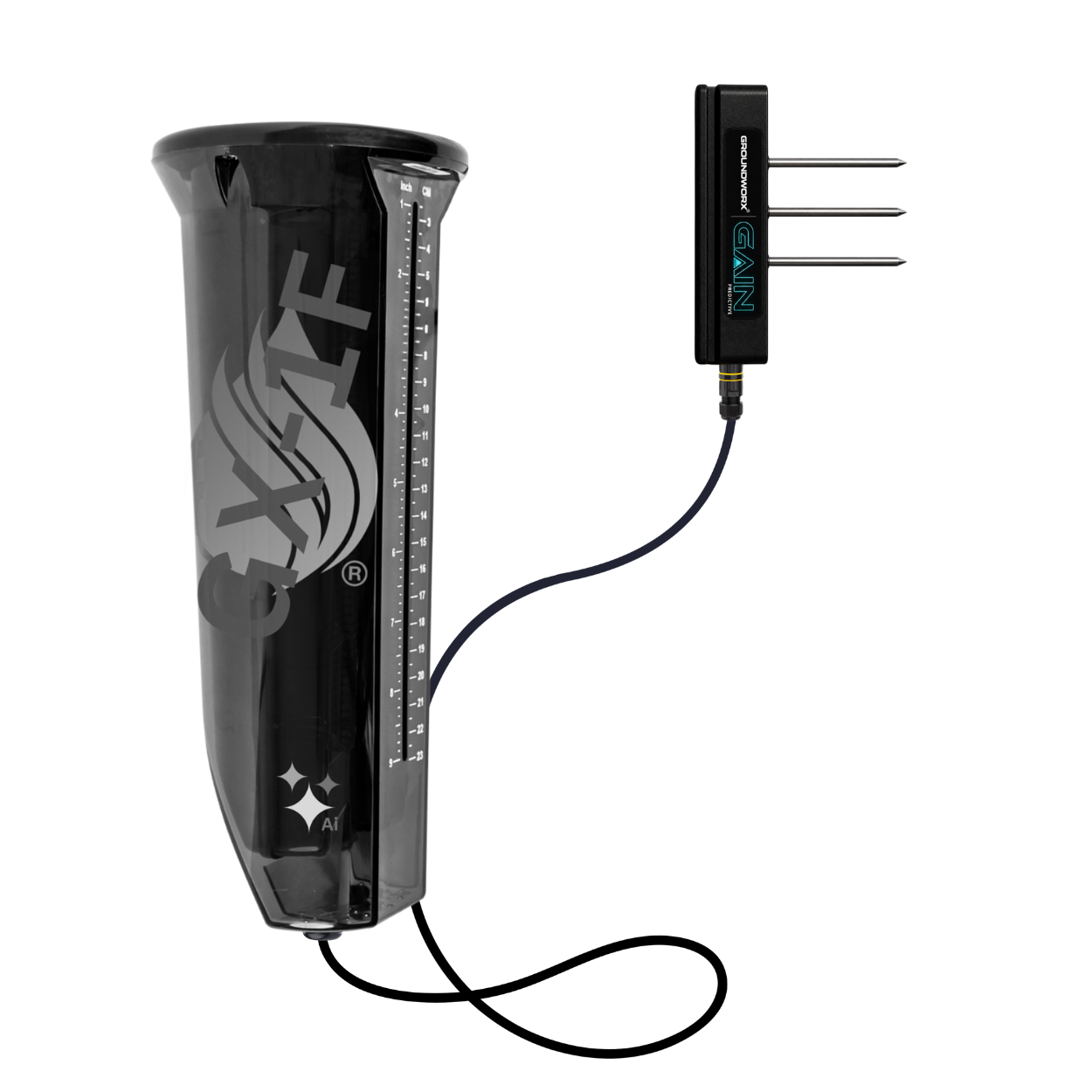
GX-1F without cover for SmartWell installation, with flexible sensor cord

GX-1F — trees with SmartWell

The open configuration installs in iQ SmartWell just under the surface. Monitor course trees with a 44-inch flex cord; custom orders reach up to 5 meters. Nothing visible above ground.

2-year warranty with SmartWell
GX-1F Flex logo
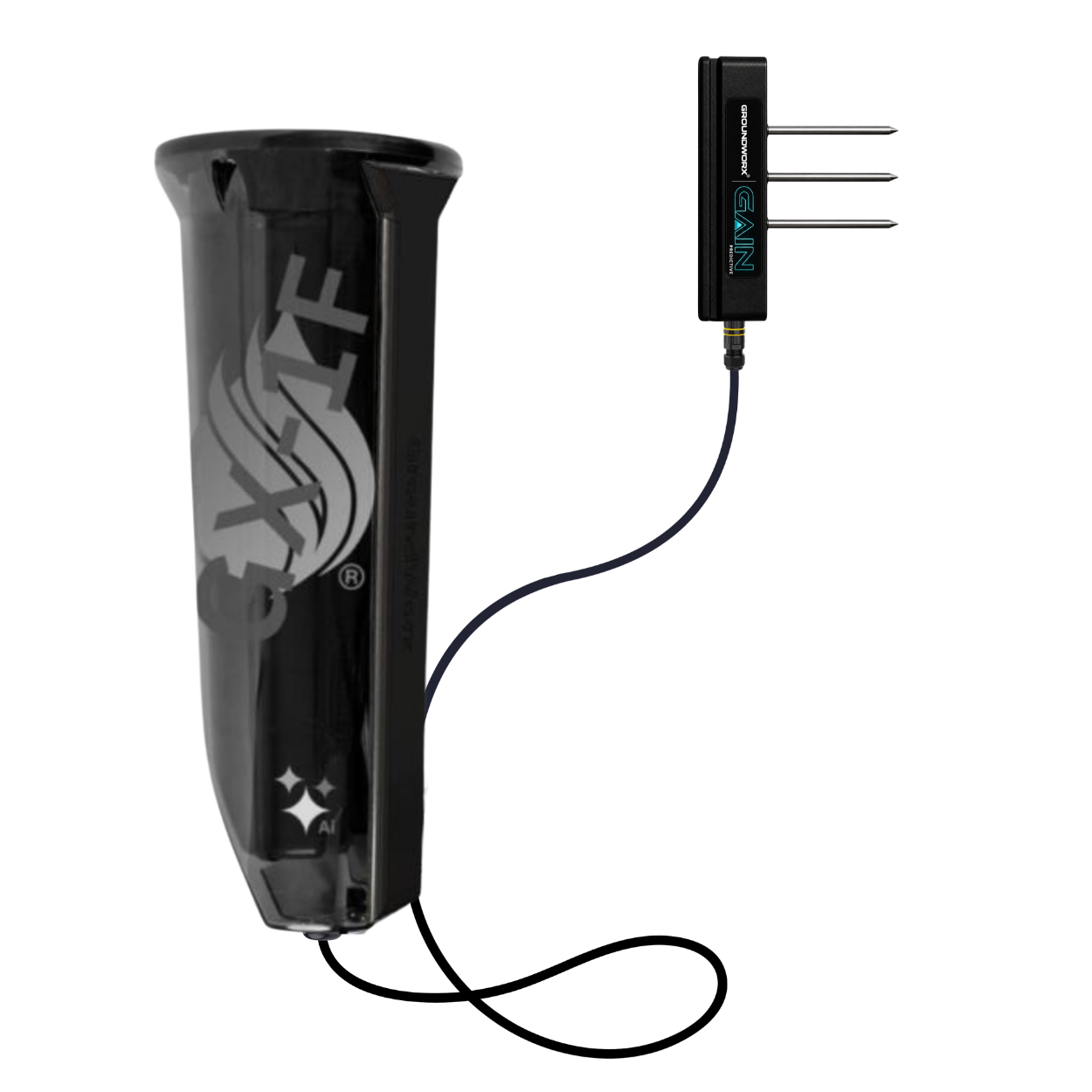
Covered GX-1F standalone tree sensor with flexible cord and GAIN sensing unit

GX-1F — standalone course trees

The covered configuration works without iQ SmartWell. Standalone, wireless, and autonomous: invisible root-zone intelligence for mature trees, specimen plantings, and the canopy along your fairways.

1-year warranty standalone

Under development · Target Q1 2027

iQ Capsule — the next step for greens.

Designed for playing-surface intelligence on greens and athletic surfaces, iQ Capsule succeeds the GX-1S and will eventually collect data on its own without a SmartWell. Its target release is Q1 2027, subject to development progress — it is not available yet. GX-1A supports fairways and common areas today, while GX-1F brings tree care into the same GAIN network.

GroundWorx Advisory

GroundWorx Advisory — Site Technology & Efficiency Audits

A site-specific technology and efficiency audit for golf courses and high-value sports facilities — from the ground you cannot see to the decisions your board needs to make.

Schedule a Site Audit
01

Telemetry Blind Spots

Map microclimate variance, root-zone moisture gaps, and unmonitored turf zones across all 18 greens into a SmartLocation blueprint. For high-value sports facilities, map the playing surfaces and turf zones that matter most.

Site-specific SmartLocation blueprint

02

Control & Infrastructure Interoperability

Assess central control systems — Toro, Rain Bird, and Hunter — alongside pump station telemetry and weather station sync to eliminate blind watering schedules. Identify interoperability gaps and the steps needed to connect the site's infrastructure.

Control, pump & weather interoperability assessment

03

Board-Ready Playbook

An executive-ready financial ROI dossier with quantified water and utility cost savings and a staged rollout timeline, built for greens committees, facility leadership, and boards.

Financial ROI dossier & staged rollout timeline

100%

100% Fee Credit Guarantee

100% of your audit fee is credited directly toward either a Par Package (20 iQ SmartWells + 10 GX-1A sensors) or an 18-sensor direct purchase within 60 days.

Explore GroundWorx Advisory

Pricing, in plain terms

$850 per sensor. $325 a year for GAIN. No surprises.

Sign a 3- or 5-year GAIN agreement and any GX-1A, GX-1F or GX-1S drops to $750 — $1,500 all-in per sensor over 3 years, or $2,000 over 5.

Hardware

$850

Per GX-1A sensor. Wireless, seven-year battery, made in the USA. Each one starts sampling in an iQ SmartWell to establish the location’s baseline.

Software

$325 / sensor / year

The GAIN subscription: sensor readings while sampling, AI weather intelligence, learned-location predictions between visits, recommendations, and the GAIN portal.

A typical golf deployment

20 wells · 10 sensors

Start each of the twenty locations with a sensor in a SmartWell to collect initial data and establish a baseline. Once those locations are predictable, wells can move to sample new locations. At volatile locations, the well stays in place while the sensor is stored safely elsewhere and returned a couple of times a year for recalibration. GroundWorx owns the assets — you pay for GAIN per location, not the hardware. The goal is twenty learned SmartLocations without leaving twenty sensors in the ground; sensor-free locations provide AI predictions, not live measurements.

Buy à la carte

Own your sensors outright.

Purchase GX-1A or GX-1F sensors at $850 each, including one year of GAIN service. Sensors installed with iQ SmartWell carry a 2-year hardware warranty; standalone GX-1F sensors carry a 1-year hardware warranty. GX-1A is used with iQ SmartWell. After the first year, GAIN continues at $325 per sensor per year.

Managed deployment

GroundWorx owns the hardware.

For golf and rotating deployments, GroundWorx owns the sensors and SmartWells. You pay only the GAIN subscription per location. Commercial and agricultural sites run one-to-one — one sensor per SmartWell, every location reading continuously.

Paid pilots run at discounted rates, and what you pay is credited toward your final purchase.

Integration spotlight · GreenSight TurfCloud

One operating picture, from the canopy to the root zone.

GreenSight is an official distributor and integration partner. GroundWorx in-ground moisture and temperature readings sync directly into TurfCloud, where they merge with drone aerial imagery — thermal and NDVI mapping — autonomous equipment, and crew management. For superintendents, that means what is happening above the surface and below it finally reads as one story.

Below the surface

GroundWorx in-ground moisture, temperature, and salinity readings sync directly into TurfCloud, arriving every ten minutes against the same mapped locations.

Above the surface

GreenSight drone flights add thermal and NDVI imagery, so canopy stress and root-zone conditions are read against each other instead of in separate tools.

Across the property

Autonomous equipment and crew management live in the same operating picture, so what the ground says and what the crew does are never two systems apart.

“We're excited to welcome GroundWorx into the TurfCloud ecosystem. This integration gives our users deeper insight into their soil and water management practices, and strengthens our shared mission of empowering proactive, sustainable turf care.”
Stephen Ohlson, VP of Turf and Agriculture, GreenSight

Open API

No walled gardens. Your data goes wherever you need it.

GAIN is built as an open, bidirectional platform. Root-zone telemetry streams out to any system you run, and context streams back in — irrigation run times, agronomic events, imagery, weather — so every prediction is made with the full picture. You own your data, and you can move it.

Bidirectional by design

Read every reading, prediction, and recommendation out. Write irrigation events, maintenance activity, and third-party observations back in.

Integrates at will

REST endpoints, webhooks, scoped API keys, and scheduled exports. If a platform speaks HTTP, GroundWorx can speak to it.

Your data, portable

Raw and derived telemetry are exportable at any time, in open formats, to your own warehouse. No lock-in, no gatekeeping, no export fee.

Get started

Talk to someone who knows golf.

Tell us about your site and we will walk through where sensors belong, what GAIN would watch, and what a first season looks like.

Two fields is all we need. We reply within one business day and use your details only to respond to this request.