


Bidirectional by design
Read every reading, prediction, and recommendation out. Write irrigation events, maintenance activity, and third-party observations back in.
Solutions
Every property type has its own pressures, standards, and budget conversation. Pick yours and see how GroundWorx is deployed there.
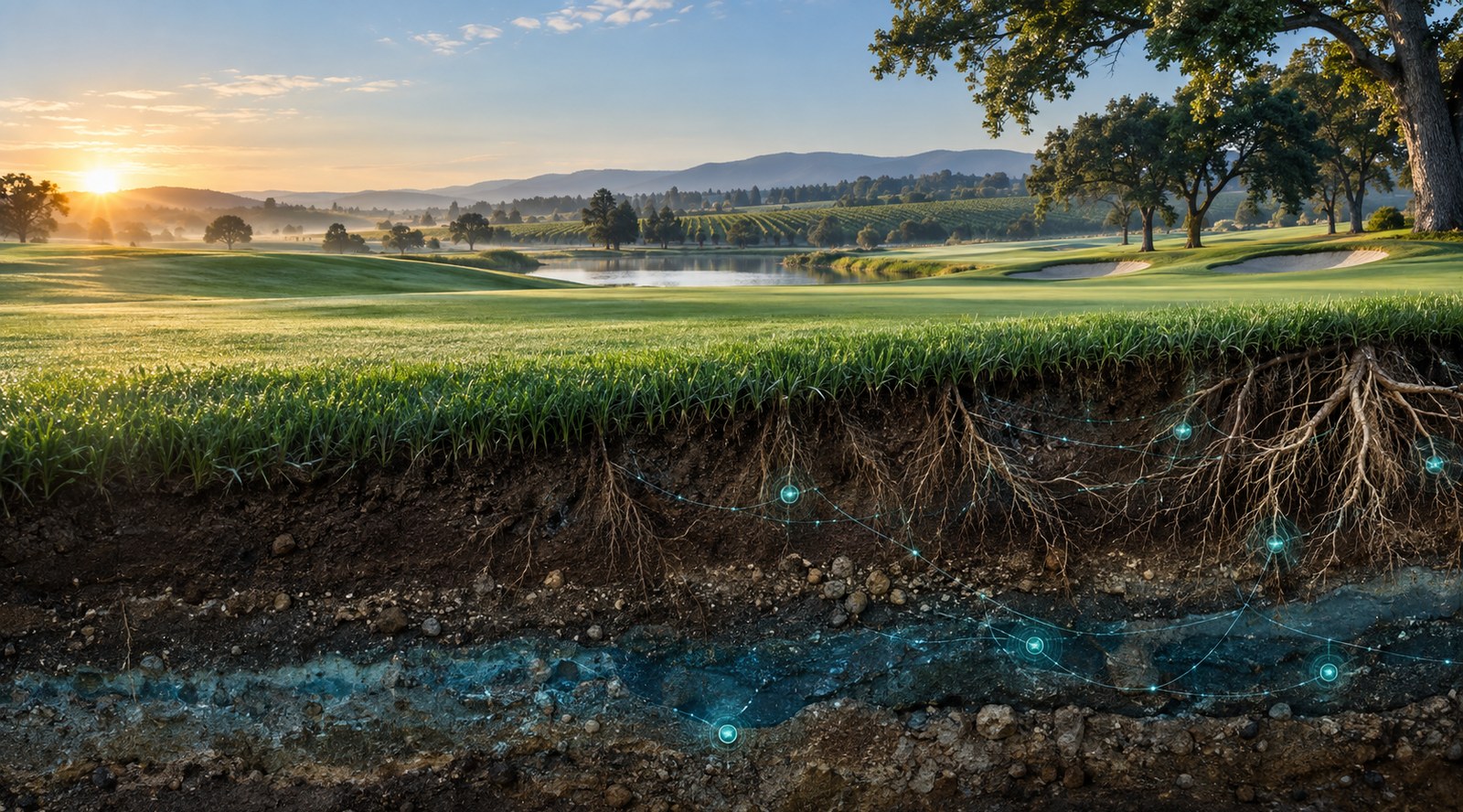
Championship conditions
Superintendents run the tightest tolerance in turf. GroundWorx brings root-zone intelligence to the entire course: GX-1A sensors with iQ SmartWells for fairways and common areas, and invisible GX-1F Flex Sensors for the trees that define its character. Hand-watering, syringe cycles, overnight run times, and tree care follow measurement instead of memory.
See the golf deployment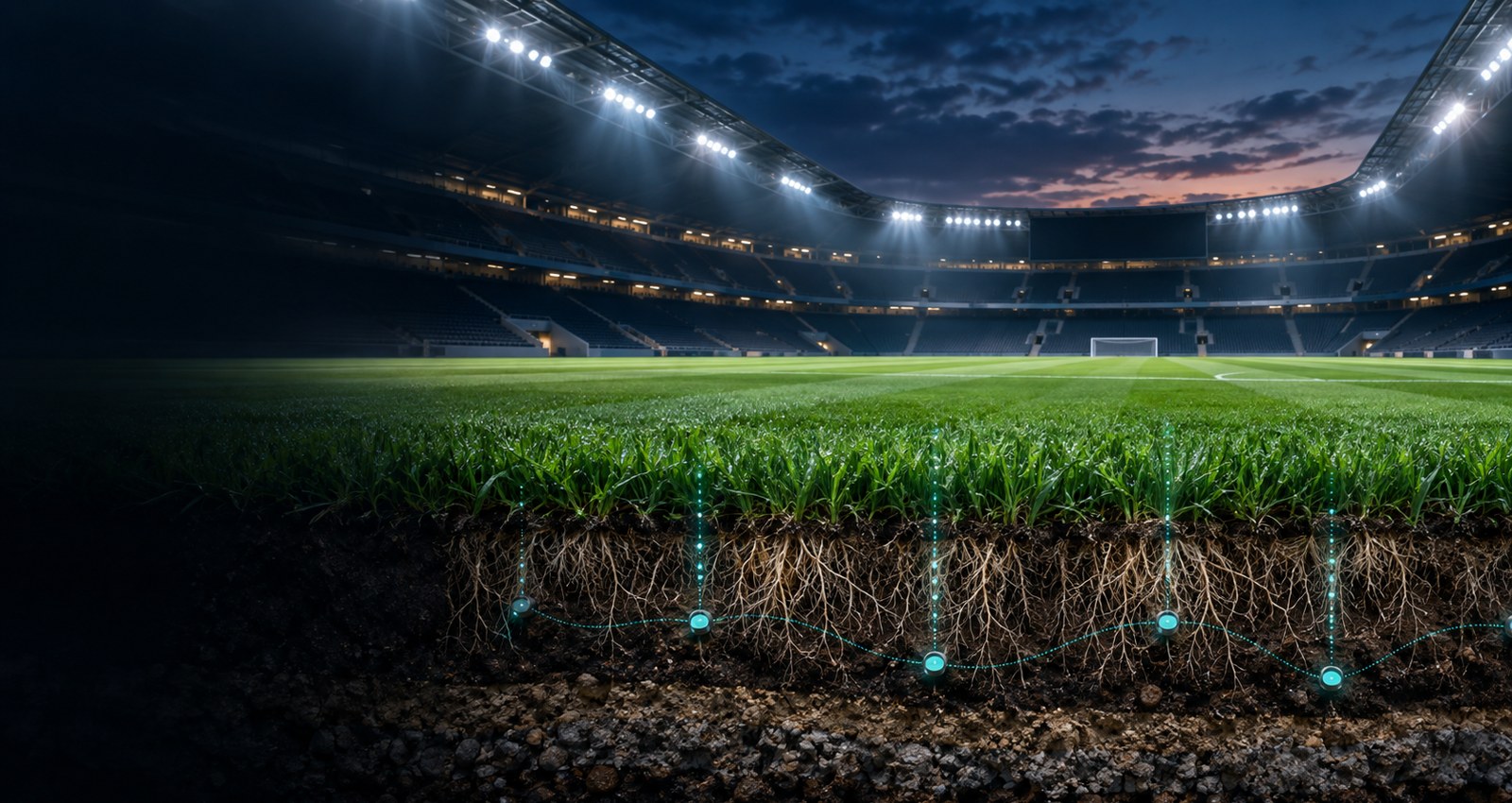
Safe, playable surfaces
Game-day surfaces live between too wet and too hard. The GX-1S sports sensor sits below the play surface and reports root-zone conditions continuously — fully standalone, with no iQ SmartWell housing required — so grounds crews can defend a field decision with data.
See the sports fields deployment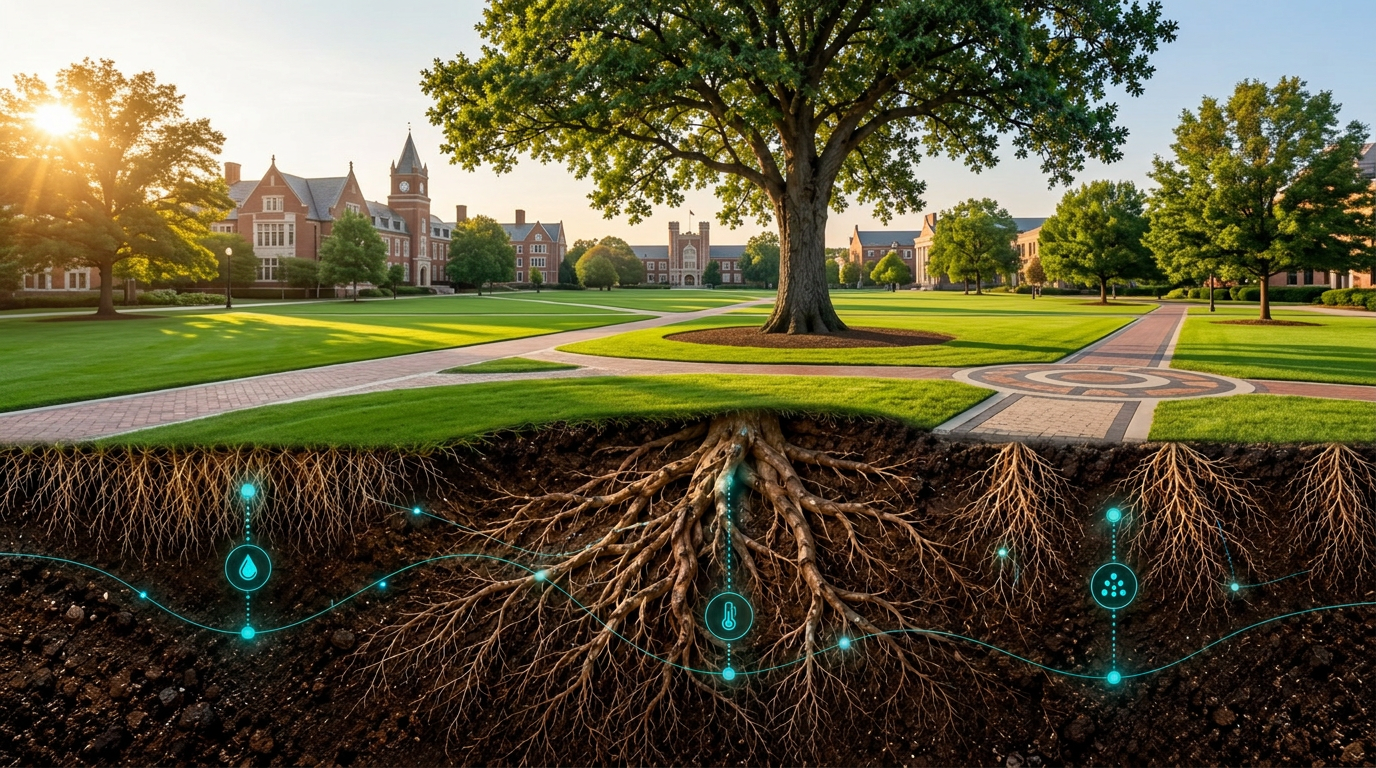
Campus & municipal grounds at scale
Campus and municipal grounds span athletics, quads, formal landscape, parks, medians, and public green spaces — each with a different standard and a shared budget. GroundWorx gives facilities teams a single record of what every area is actually doing.
See the schools, universities & smart cities deployment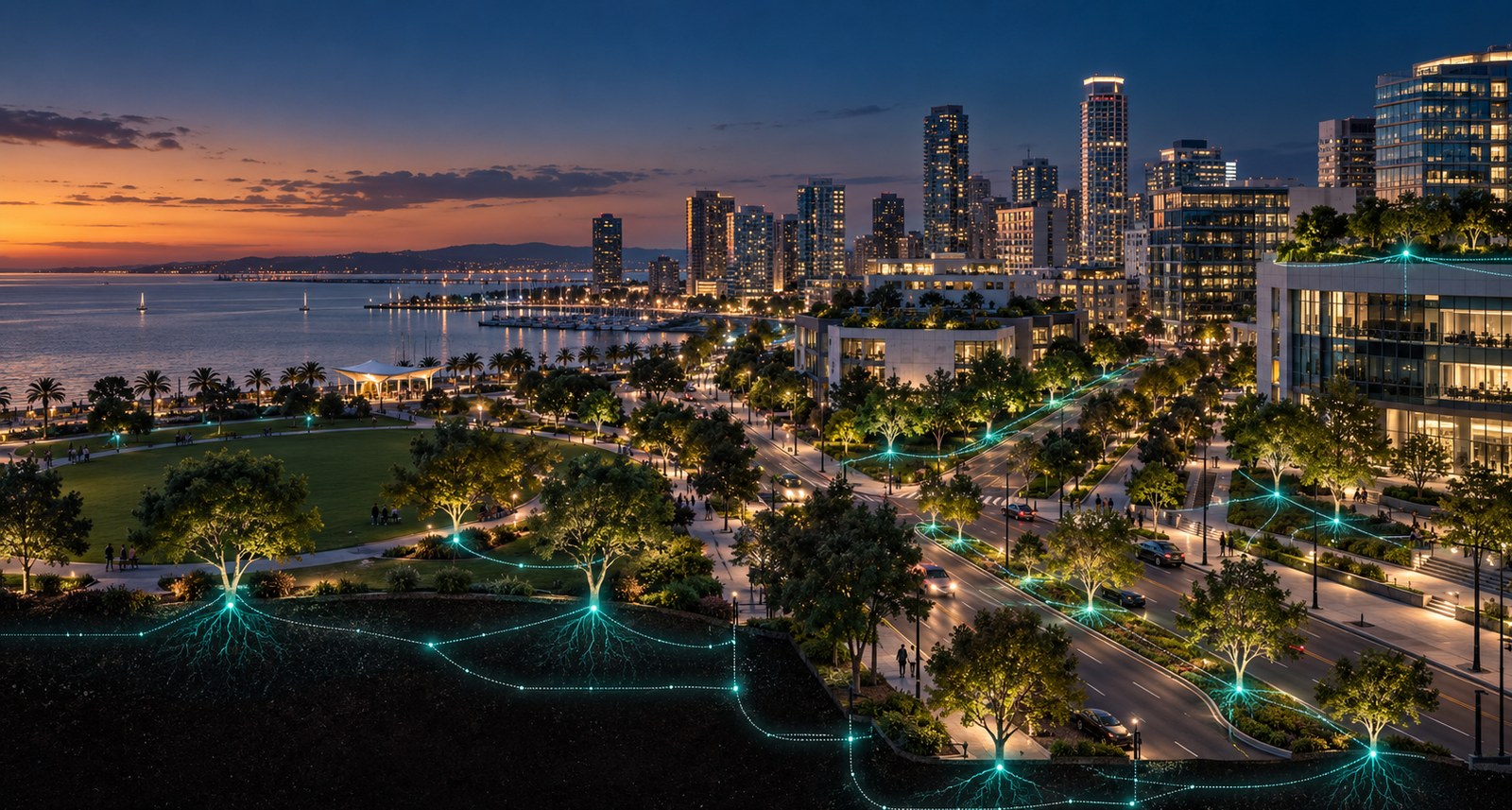
Portfolio landscape
Corporate campuses, resorts, HOAs, and managed portfolios are judged on appearance and audited on cost. GroundWorx makes landscape performance measurable while helping protect irreplaceable living assets — including mature specimen trees, old-growth olives, and large, high-value date palms.
See the commercial properties deployment
Protect living assets
Mature specimen trees, old-growth olives, and large date palms can take decades to replace — and they hide stress below ground long before the canopy shows it. The GX-1F Flex Sensor is the tree-specialized model in the GX-1 family and the only tree sensor that disappears entirely: fully standalone and wireless, it sits just under the surface with nothing visible above ground — no wiring, no above-ground hardware, nothing to detract from the landscape or invite damage. Its flexible sensor cord reaches 44 inches deep into the expansive root zone, with custom orders available up to 5 meters for the deepest rooting trees. It installs in minutes and works with or without the iQ SmartWell, then GAIN runs autonomously on top of it — turning raw readings into early warnings, forecasts, and watering decisions delivered without anyone having to pull data or build reports for arborists and land stewards.
See the trees & arboriculture deployment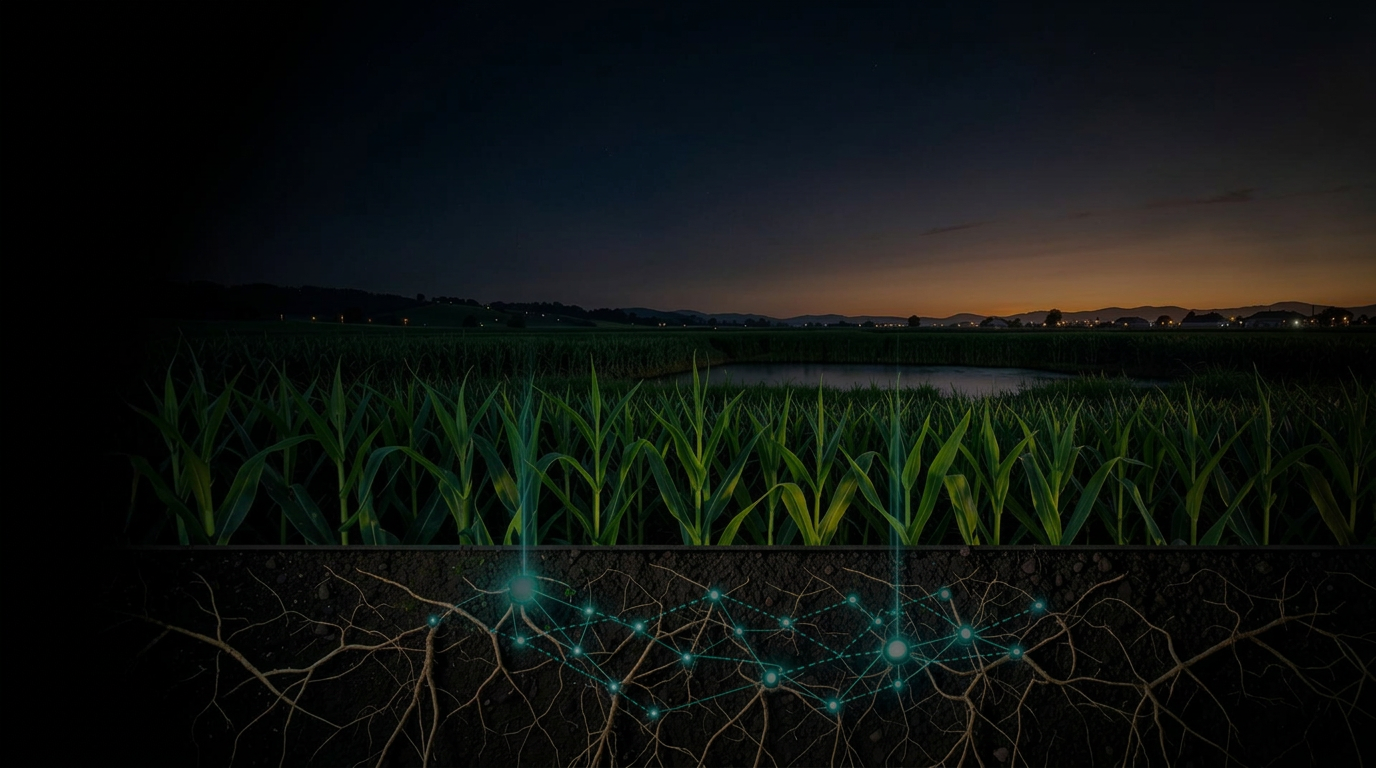
Wine grapes & vineyards
Wine grapes live and die by precise water stress — too much vigor dilutes the fruit, too little costs the vintage. The GX-1F Flex Sensor is the viticulture model in the GX-1 family: fully standalone and wireless, it sits just under the surface between the vines with nothing visible above ground — no wiring, no hardware to work around during canopy management or harvest. Its flexible cord reads a 1 to 44 inch profile — the full active root zone of established vines — with custom orders up to 5 meters. It installs in minutes, works with or without the iQ SmartWell, and GAIN runs autonomously on top: block-level stress warnings, ET-driven irrigation recommendations, and salinity tracking delivered without anyone pulling data.
See the viticulture deployment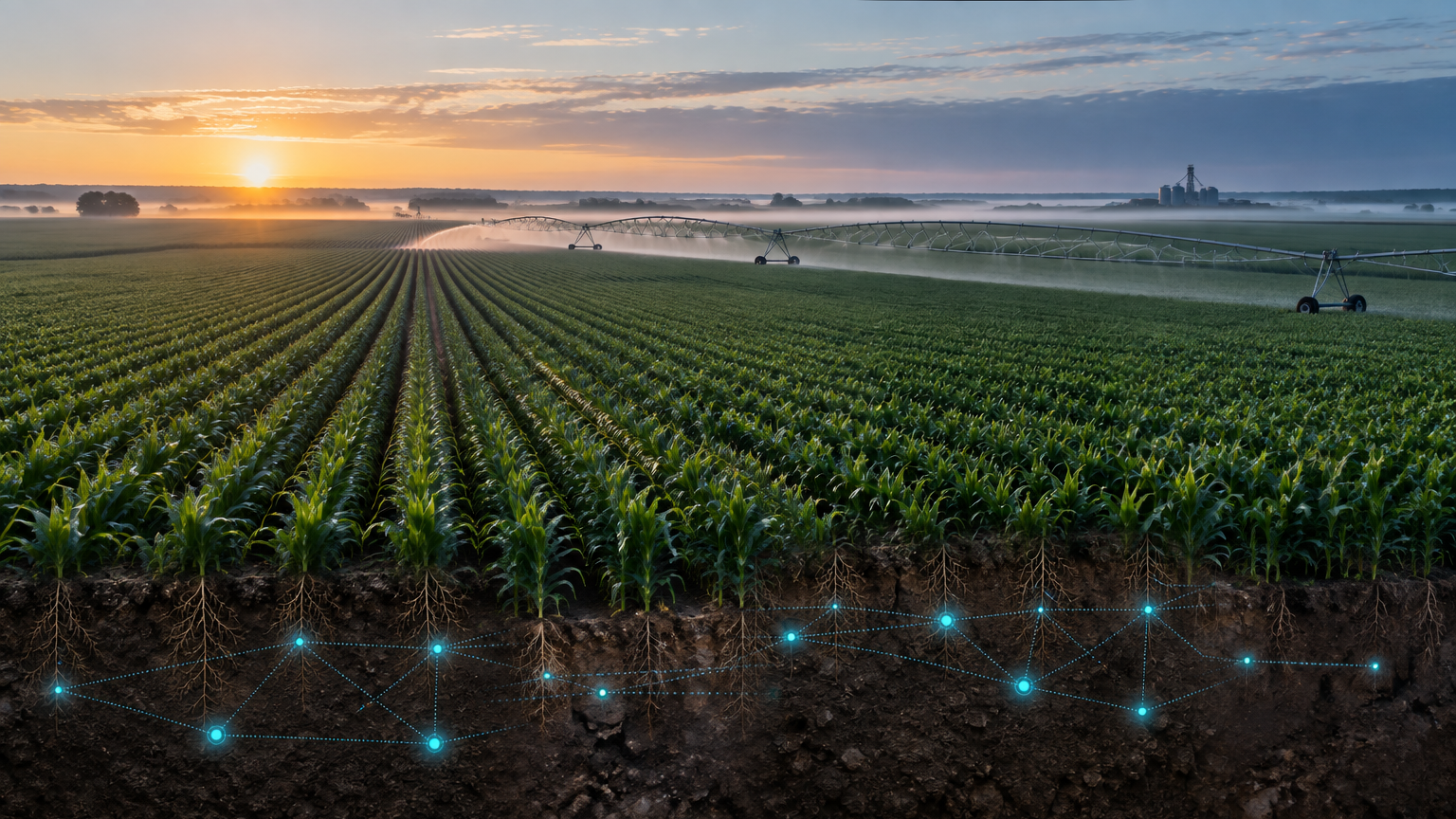
Field-scale irrigation
The iQ SmartTowers extend GroundWorx into production agriculture and high-value perennial crops, reporting soil moisture, temperature, and salinity at depth across open acreage. From old-growth olive trees to large date palms, irrigation decisions follow the root zone — not the calendar.
See the agriculture deployment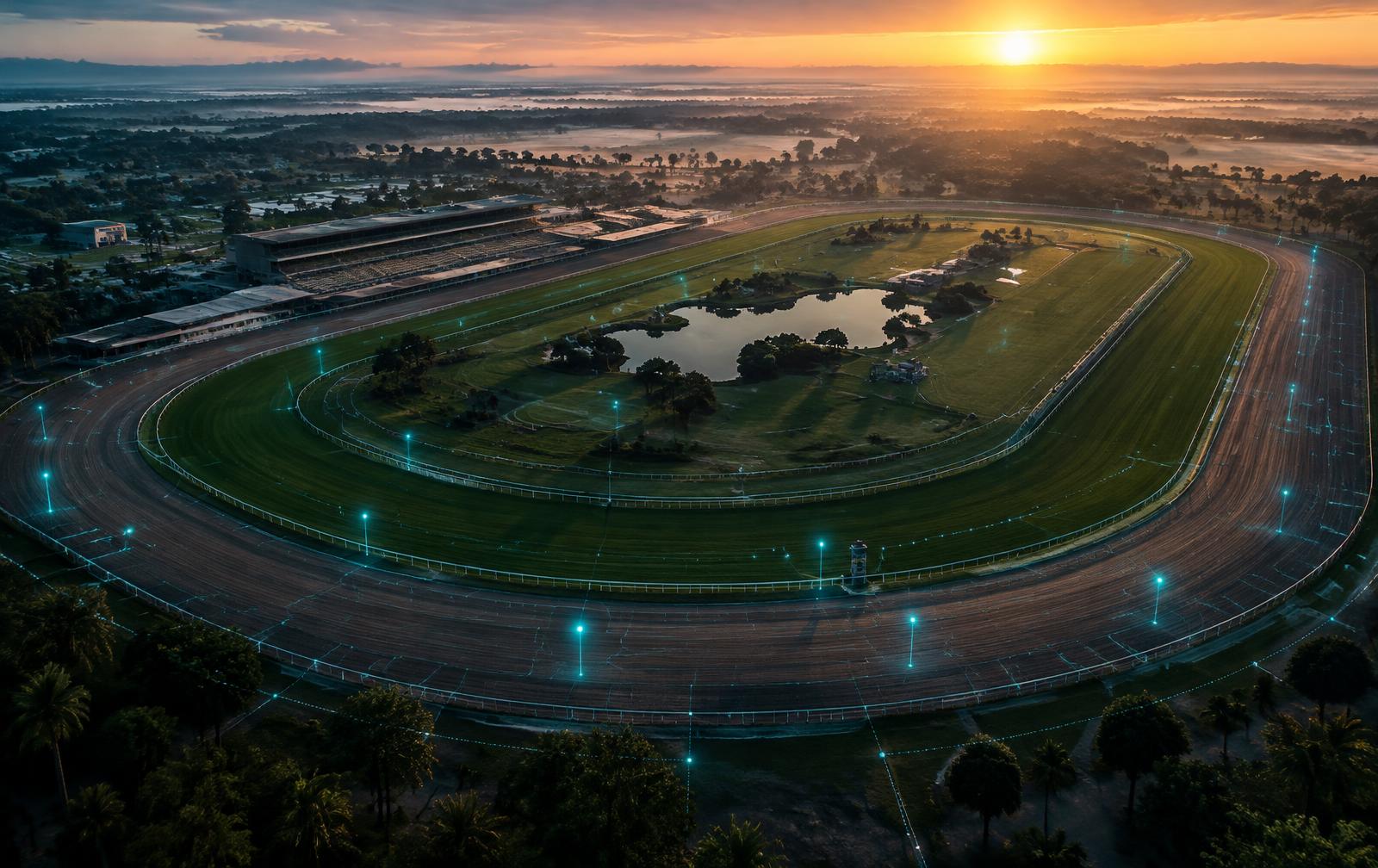
Track footing & turf courses
Racetracks, training centers, and equine facilities live or die by surface consistency. GroundWorx reads moisture, temperature, and salinity beneath dirt and synthetic footing, turf courses, and arenas every ten minutes, and GAIN turns those readings into watering and maintenance recommendations so track superintendents can document conditions and water to what the surface actually needs.
See the equestrian & racing deployment
Emerging fire intelligence
Under DevelopmentAn emerging 32-element sensing network for wildfire prevention — monitoring fuel moisture below ground and air quality, smoke, flame, and atmospheric conditions above it, with autonomous alerts through GAIN. The same deep root-zone sensing protects historic olive groves and orchard assets on the property from drought stress and fire risk.
See the iq fire station deploymentGAIN / Water savings estimator
US water rate region
Baseline annual use
22.5M gal
Estimated irrigation per year
Water conserved (25%)
5.61M gal
Modeled annual gallons conserved
Annual utility cost savings
$42,094 / yr
West · $7.50 per 1,000 gal
Estimate only, not a quote or guarantee. The 25% reduction shown here is the typical ROI we expect from either the Par Package (20/10 config: 20 iQ SmartWells and 10 GX-1A sensors) or a direct purchase of 18 sensors — both configs reach 25% easily. Basis: GCSAA Golf Course Environmental Profile U.S. median: 68.9 acre-feet (~22.45M gal) per facility per year. Savings use a 25% reduction benchmark; annual utility savings use the selected modeled US regional water rate (West: $7.50 per 1,000 gallons), not a local utility quote. Map zones are schematic, not state-level service boundaries. Sources: GCSAA, USDA/USGS, and university extension irrigation benchmarks for water use. Actual results depend on climate, soil, water source, local utility rates, and current practices.
Get a customized sensor planOpen API
GAIN is built as an open, bidirectional platform. Root-zone telemetry streams out to any system you run, and context streams back in — irrigation run times, agronomic events, imagery, weather — so every prediction is made with the full picture. You own your data, and you can move it.
Read every reading, prediction, and recommendation out. Write irrigation events, maintenance activity, and third-party observations back in.
REST endpoints, webhooks, scoped API keys, and scheduled exports. If a platform speaks HTTP, GroundWorx can speak to it.
Raw and derived telemetry are exportable at any time, in open formats, to your own warehouse. No lock-in, no gatekeeping, no export fee.
Central irrigation control
Toro Lynx, Rain Bird Cirrus and Nimbus, Hunter, and other central systems. Push root-zone moisture into your control platform and pull run times, flow, and station history back into GAIN so predictions know what was actually applied.
Weather networks
Bring your own hyper-local weather station or third-party weather feed alongside GAIN's modeled AI weather. Both sources sit side by side in the record rather than one replacing the other.
Agronomy & turf software
Sync locations, readings, and events into the agronomy, maintenance, and work-order platforms your team already runs — including GreenSight TurfCloud.
GIS & mapping
Every SmartLocation carries coordinates, so readings publish into ArcGIS, QGIS, and property mapping layers as live geospatial data, not a spreadsheet export.
Enterprise data lakes
Stream raw and derived telemetry into Snowflake, BigQuery, S3, or your own warehouse on a schedule, and run it through whatever BI or sustainability reporting you already use.
Build your own
A documented REST API with webhooks and scoped API keys. If it can make an HTTP request, it can read GroundWorx data and write context back.