


Emerging fire intelligence

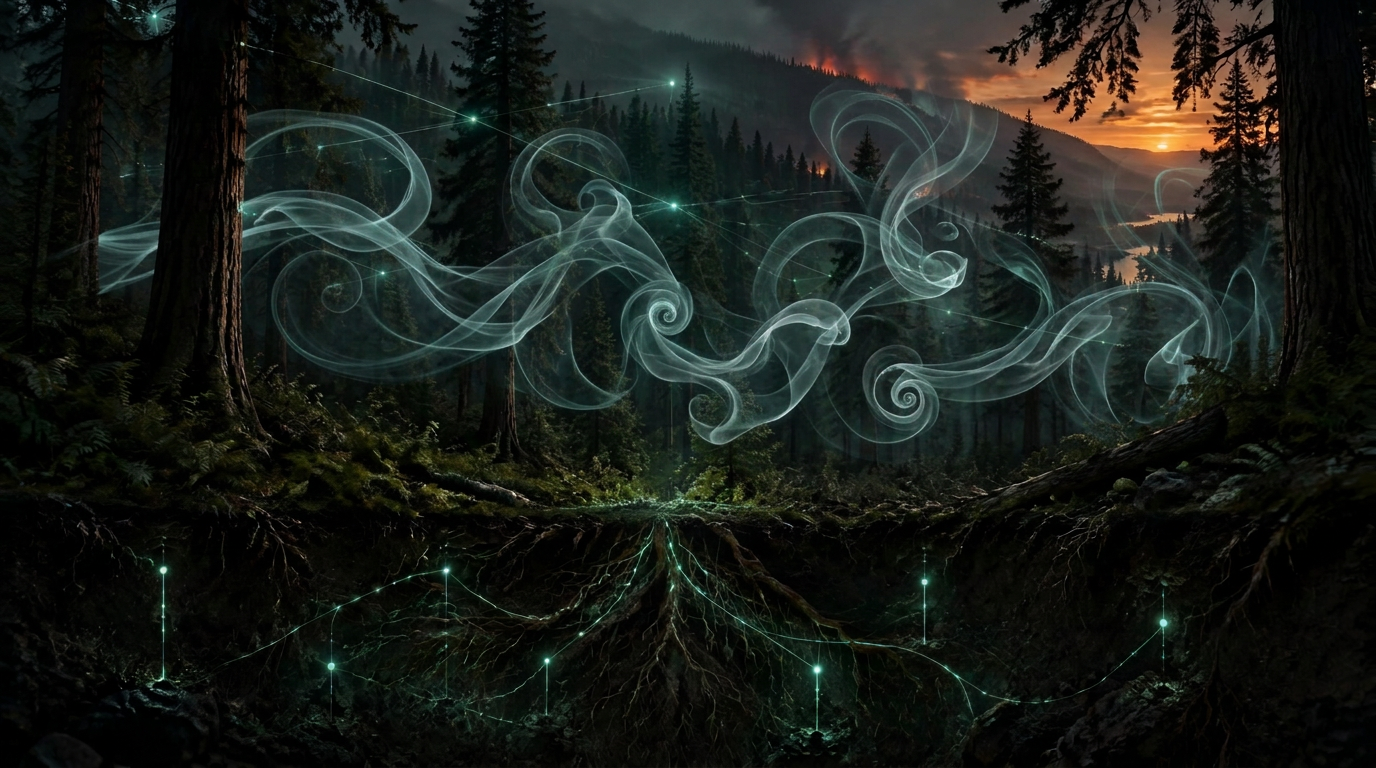
Early detection where fires start — on the forest floor.

An emerging 32-element sensing network for wildfire prevention — monitoring fuel moisture below ground and air quality, smoke, flame, and atmospheric conditions above it, with autonomous alerts through GAIN.

iQ Fire Station managed with GroundWorx
Under Development

The iQ Fire Station is a 32-element SmartTower currently under active development and engineering. Sensing capabilities, form factor, and availability timeline are subject to refinement as the product moves toward release.

What you are up against

  • Wildfire detection happens too late — after smoke is visible from a distance, the fire is already established.
  • Existing detection depends on human patrols or satellite passes with long gaps between readings.
  • Wildland-urban interface zones need always-on sensing, not seasonal coverage.

What changes

Detection
Continuous 32-element sensing — smoke, flame, particulates, thermal imaging, and atmospheric readings — catches fire signatures in the minutes that matter.
Fuel moisture
In-ground soil moisture and temperature readings track fuel conditions in real time, not from a weekly index.
Resilience
Meshed mission-critical communications over satellite, LTE, LoRaWAN, and 900 MHz keep reporting when other networks go down.

Typical deployment

What goes in the ground

  • iQ Fire Station — 32-element SmartTower spokes (under development)
  • Dispersed Starlink Super Station hubs for satellite backhaul across WUI zones and timberlands (under development)
  • Air quality, smoke, flame, particulate, thermal imaging, and atmospheric sensing above ground
  • In-ground fuel-moisture sensing + multi-mode comms (direct satellite, Band 25 LTE, 900 MHz mesh, LoRaWAN)

Network architecture

Under Development

Hub and spoke, engineered for the worst day.

Wildfire takes out power and cell towers first. The iQ Fire Station roadmap answers that with a mission-critical resilience architecture: dispersed Starlink Super Stations as satellite hubs, and 32-element sensing towers as the spokes that mesh into them. Both the Super Stations and the full mesh topology are part of the emerging development roadmap, not a shipping product today.

The Hubs

Dispersed Starlink Super Stations

High-bandwidth, high-survivability satellite backhaul stations, strategically dispersed across wildland-urban interface zones, timberlands, and forest perimeters. Each hub carries the traffic of every tower meshed to it, so there is no single point of failure when regional grid power or terrestrial cell towers go down during an active wildfire event.

  • Placed deliberately across WUI zones, timberland, and forest perimeters — coverage designed around the terrain, not the nearest tower.
  • Satellite backhaul independent of the regional grid and of terrestrial carrier infrastructure.
  • Redundant hubs mean the loss of any one station reroutes rather than blinds the network.
The Spokes

iQ Fire Station SmartTowers

32-element sensing edge towers deployed throughout the terrain, meshing directly into the nearest Starlink Super Station. Each tower is built with Band 25 canopy-penetrating spectrum, selected specifically for dense forest and heavy foliage, and carries multi-mode communications so a reading always has a path out.

  • Band 25 LTE spectrum chosen for canopy and foliage penetration where higher bands fall apart.
  • Multi-mode comms: direct satellite capability, Band 25 LTE, 900 MHz long-range mesh, and LoRaWAN.
  • Continuous telemetry — thermal imaging, flame, smoke, air quality, atmospheric conditions, and in-ground fuel moisture.
  • Keeps reporting through total terrestrial network blackout by meshing to a hub or going direct to satellite.

01 · Edge

32-element towers sense the forest floor and the air above it, every cycle, in every season.

02 · Mesh

Towers relay to each other over 900 MHz and LoRaWAN, so a tower without a clear path uses a neighbor's.

03 · Hub

The mesh terminates at the nearest Starlink Super Station for satellite backhaul.

04 · GAIN

Readings land in GAIN, where fuel-moisture, thermal, and air-quality signatures trigger autonomous alerts.

Sensing edge → 900 MHz / LoRaWAN mesh → Starlink Super Station → GAIN

Open API

No walled gardens. Your data goes wherever you need it.

GAIN is built as an open, bidirectional platform. Root-zone telemetry streams out to any system you run, and context streams back in — irrigation run times, agronomic events, imagery, weather — so every prediction is made with the full picture. You own your data, and you can move it.

Bidirectional by design

Read every reading, prediction, and recommendation out. Write irrigation events, maintenance activity, and third-party observations back in.

Integrates at will

REST endpoints, webhooks, scoped API keys, and scheduled exports. If a platform speaks HTTP, GroundWorx can speak to it.

Your data, portable

Raw and derived telemetry are exportable at any time, in open formats, to your own warehouse. No lock-in, no gatekeeping, no export fee.

Get started

Talk to someone who knows iq fire station.

Tell us about your site and we will walk through where sensors belong, what GAIN would watch, and what a first season looks like.

We use your details only to respond to this request. No newsletters unless you ask for them.