Bidirectional by design
Read every reading, prediction, and recommendation out. Write irrigation events, maintenance activity, and third-party observations back in.




Wine grapes & vineyards
Wine grapes live and die by precise water stress — too much vigor dilutes the fruit, too little costs the vintage. The GX-1F (Flex-cord) sensor is the viticulture model in the GX-1 series: fully standalone and wireless, it sits just under the surface between the vines with nothing visible above ground — no wiring, no hardware to work around during canopy management or harvest. Its flex cord places the sensing element at a selected depth within a 1–44 inch range, with custom cords available up to 5 meters. It reads at that location, not continuously along the cord. It installs in minutes, works with or without the iQ SmartWell, and GAIN runs autonomously on top: block-level stress warnings, ET-driven irrigation recommendations, and salinity tracking delivered without anyone pulling data.
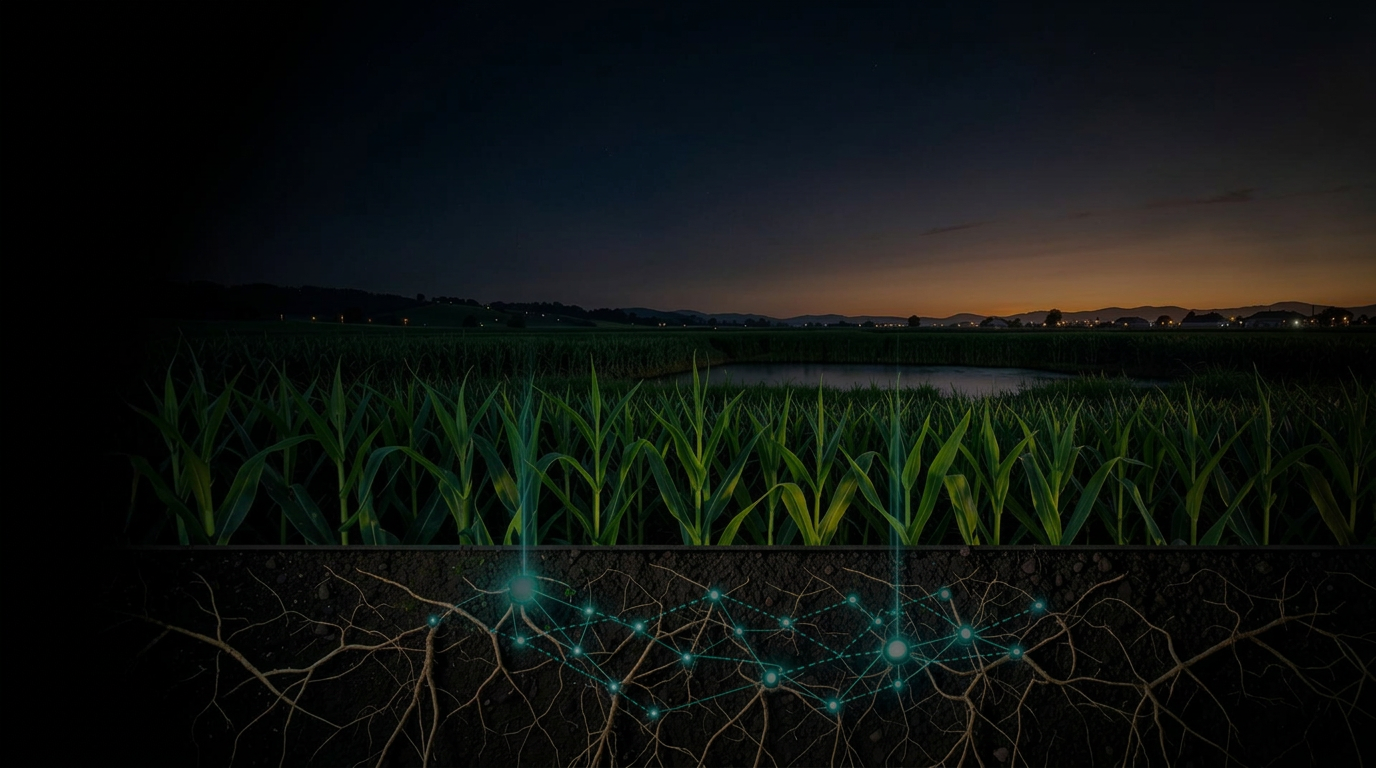
Viticulture / Vineyards · Facility estimate · 2,000 vineyard acres
Live estimateA modeled 25% irrigation reduction for 2,000 vineyard acres — approximately 223,186 gallons potentially conserved per day, annualized.
Potential gallons conserved · October 2026 · estimated
2,000 vineyard acres only · not a global industry total · resets monthly on the 1st at 00:00 UTC
Since launch: 0M+ gallons potentially conserved for 2,000 vineyard acres since October 9, 2026 · estimated.
The first month is still in progress.
~81.46M gallons / year
Potential annual water conserved for 2,000 vineyard acres
GAIN combines root-zone moisture, salinity, temperature, and weather context to predict irrigation need and reduce unnecessary watering.
Get a customized sensor planPlanning assumption: Drip-irrigated wine grapes at ~0.5 acre-foot (about 5–6 acre-inches) of applied irrigation per acre per year (UC Davis Napa County wine grape cost study) ≈ 156k gal per acre (155,866 gallons per acre in the source). These are illustrative facility benchmarks, not verified worldwide industry totals. The ticker spreads annual use evenly across 365 days and applies a 25% potential reduction. It is not measured live water waste, water already saved, or a guarantee. Actual needs and savings vary by climate, season, soil, and irrigation practice.
GAIN / Water savings estimator
US water rate region
Baseline annual use
325.9M gal
Estimated irrigation per year
Water conserved (25%)
81.5M gal
Modeled annual gallons conserved
Annual utility cost savings
$610,971 / yr
West · $7.50 per 1,000 gal
Estimate only, not a quote or guarantee. Basis: Drip-irrigated wine grapes at ~0.5 acre-foot (about 5–6 acre-inches) of applied irrigation per acre per year (UC Davis Napa County wine grape cost study) ≈ 156k gal per acre (155,866 gallons per acre in the source). Savings use a 25% reduction benchmark; annual utility savings use the selected modeled US regional water rate (West: $7.50 per 1,000 gallons), not a local utility quote. Map zones are schematic, not state-level service boundaries. Sources: GCSAA, USDA/USGS, and university extension irrigation benchmarks for water use. Actual results depend on climate, soil, water source, local utility rates, and current practices.
What you are up against
What changes
Typical deployment
GX-1 soil measurements: moisture (volumetric water content, VWC), soil temperature, salinity (electrical conductivity, EC) and dielectric. GAIN combines those readings with weather and evapotranspiration (ET); sensor-free SmartLocations provide AI predictions, not live measurements.
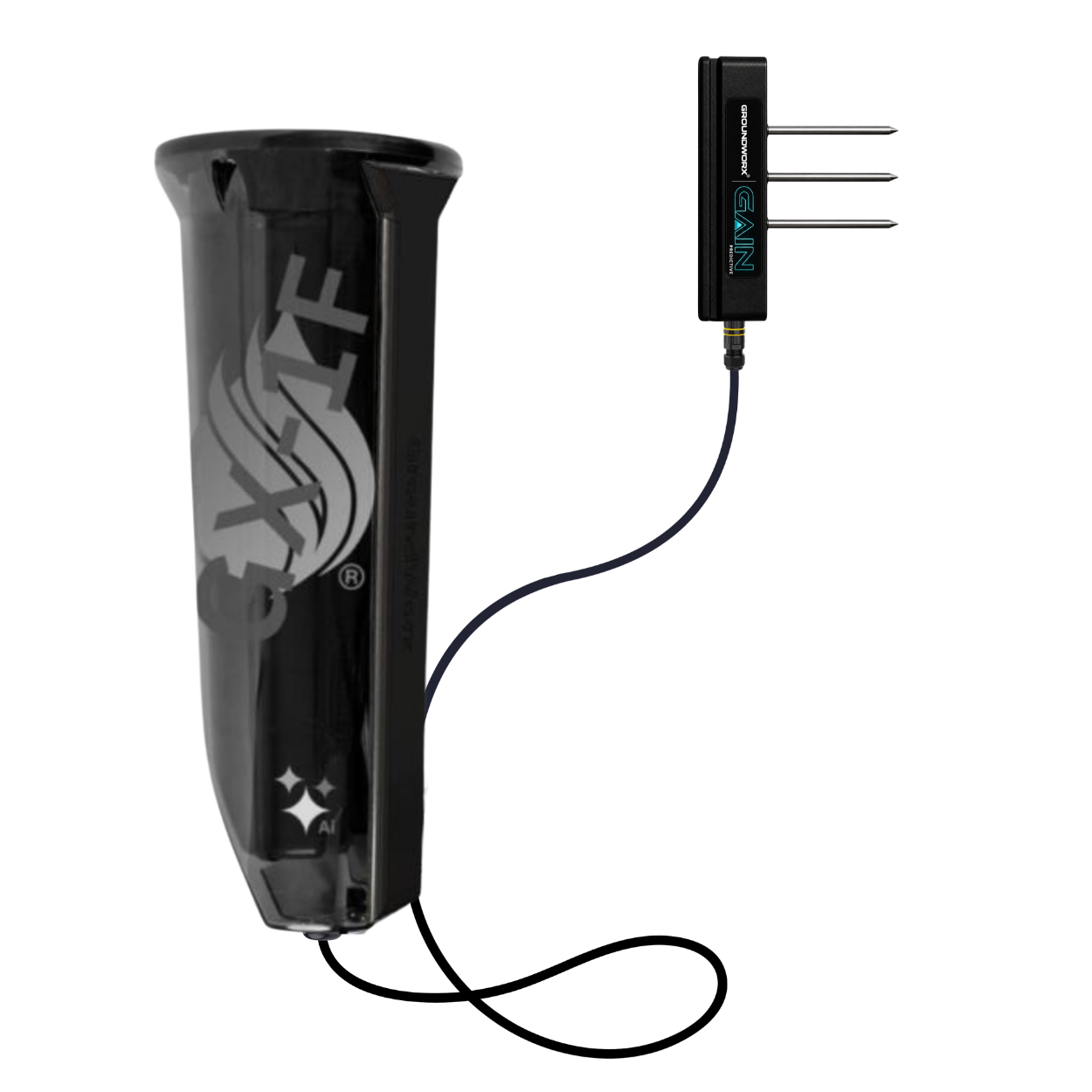
GX-1F
GX-1F product sheet (PDF)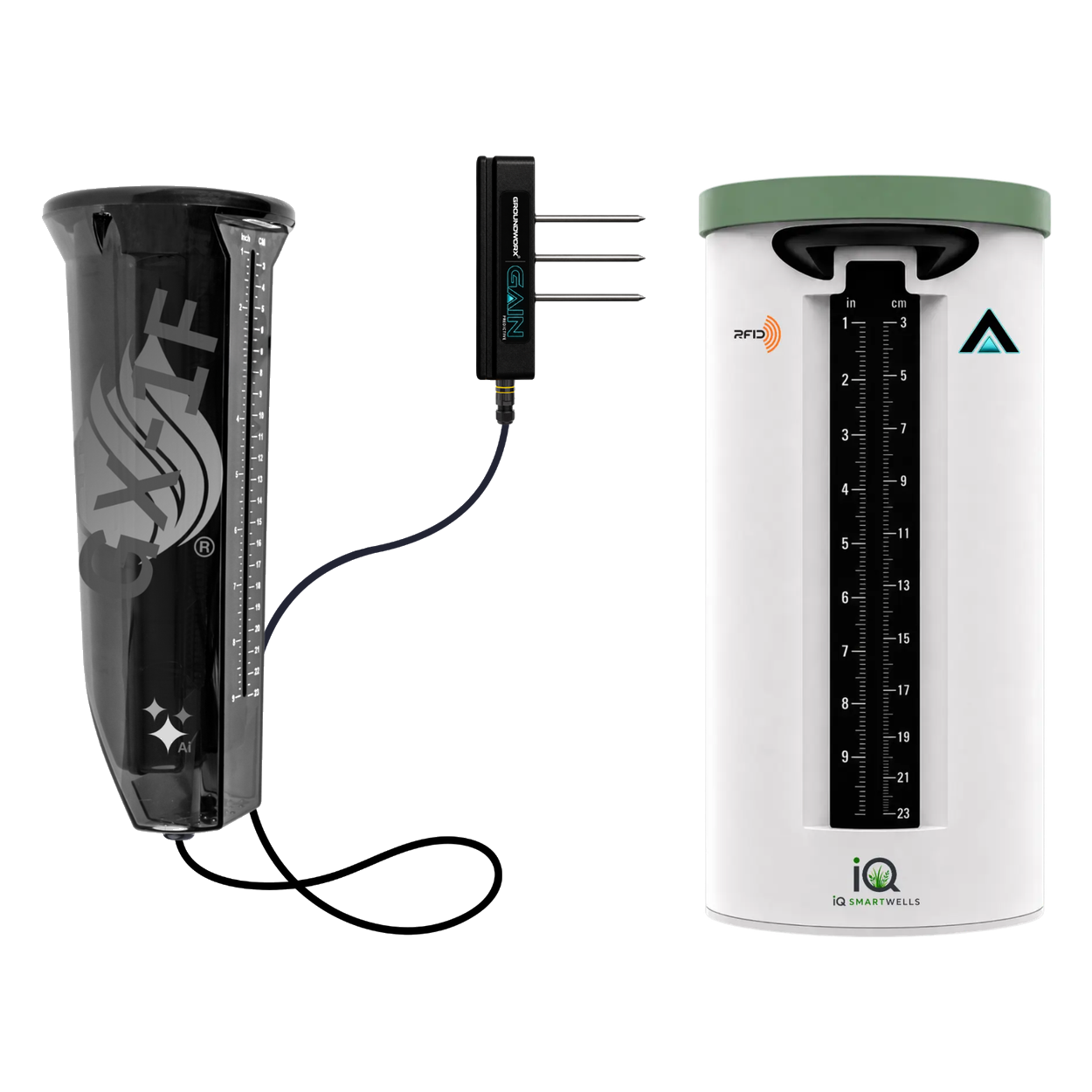
GX-1F iQ SmartWell Edition
GX-1F iQ SmartWell Edition product sheet (PDF)Under development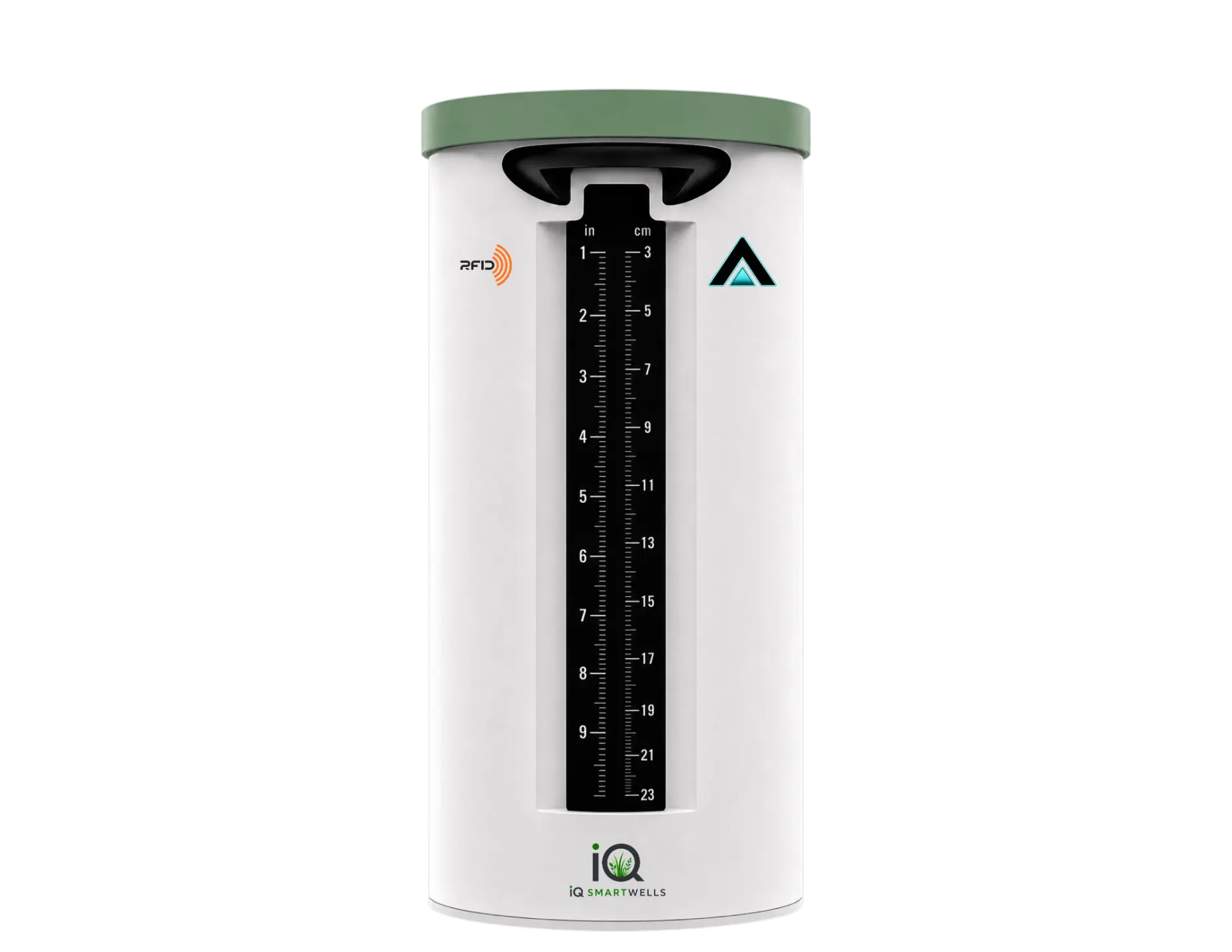
iQ SmartWell
iQ SmartWell product sheet (PDF)Under development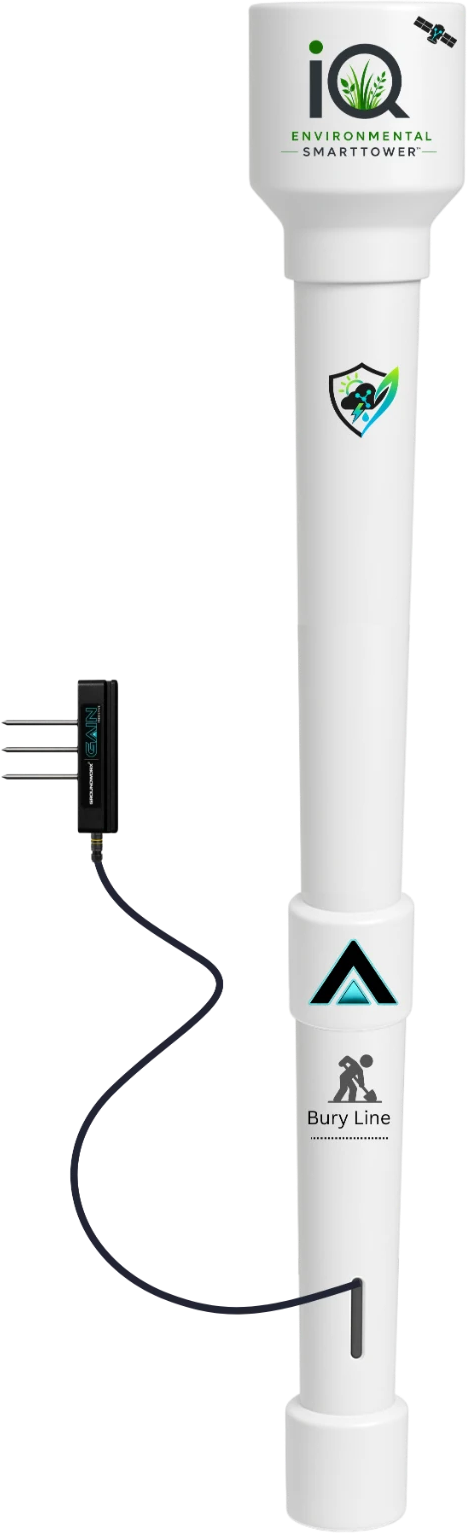
iQ1
iQ1 product sheet (PDF)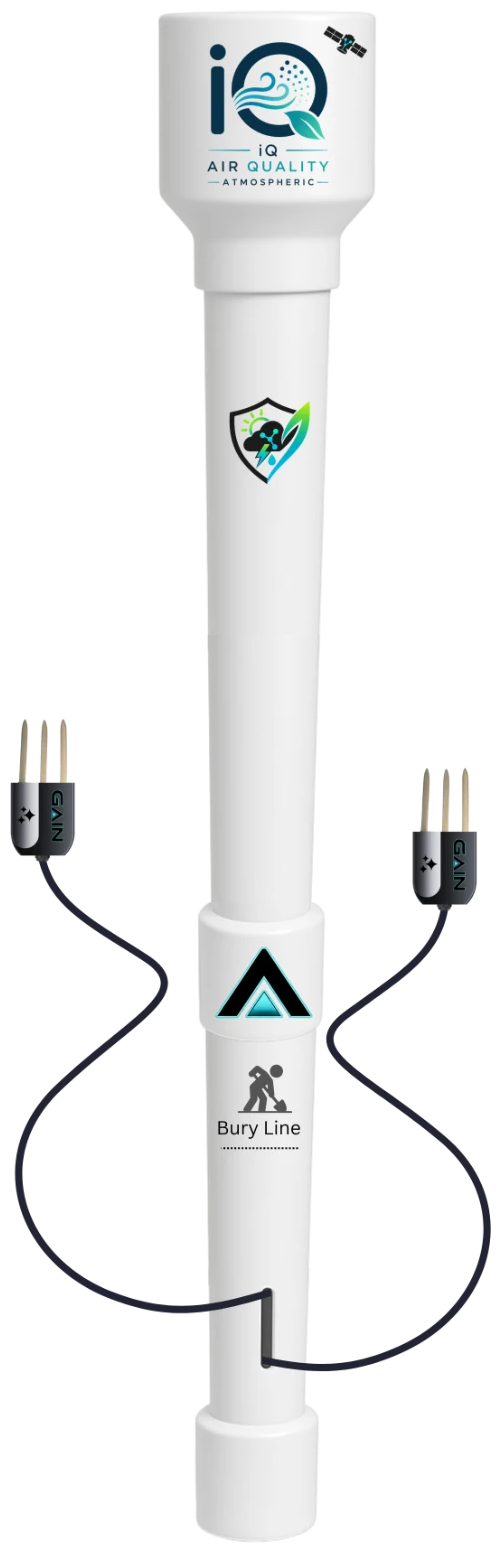
iQ Environmental SmartTower
iQ Environmental SmartTower product sheet (PDF)Under developmentThe hardware, up close

iQ SmartWell
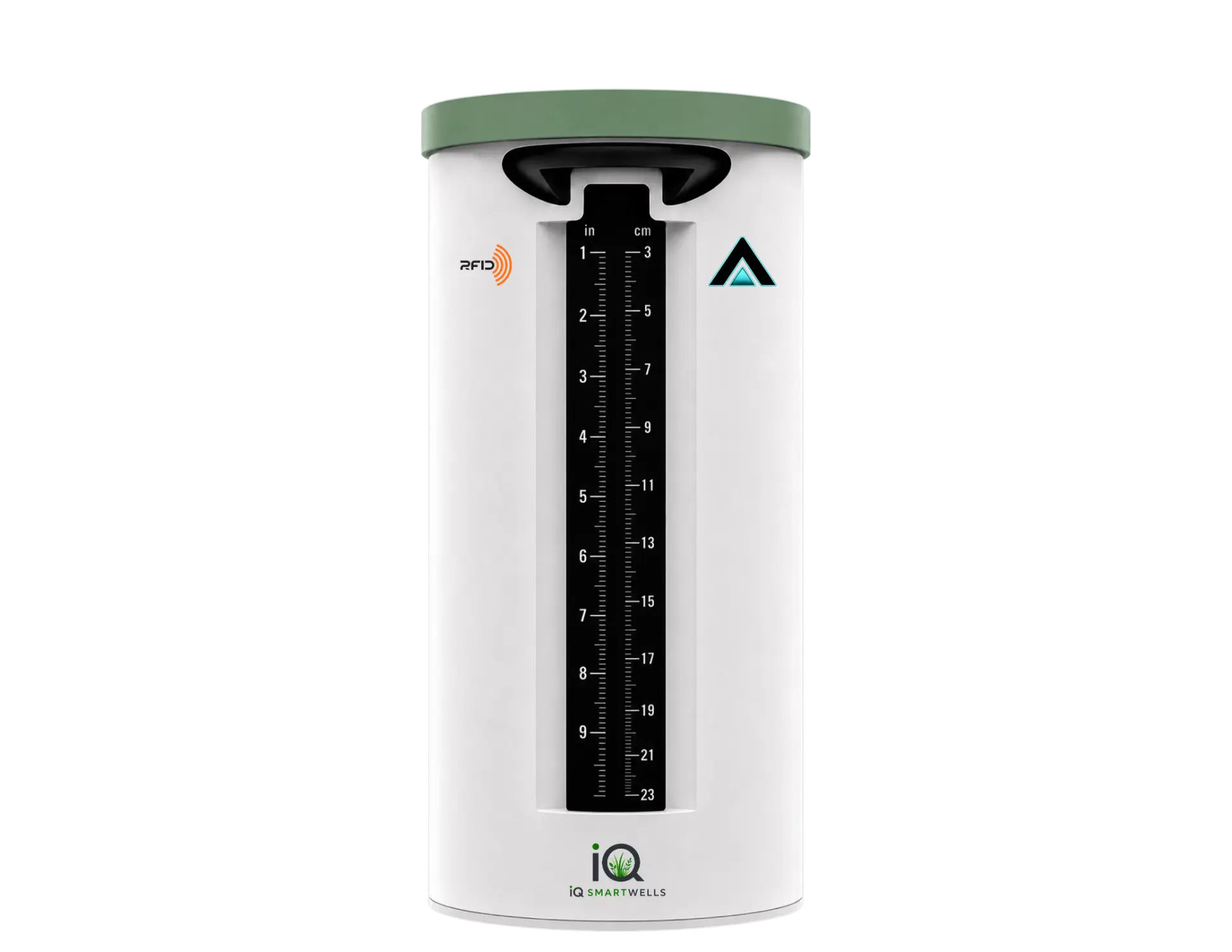
A relocatable, flush calibration sleeve, RFID-enabled with BLE auto-pairing. Sample and learn, move between blocks, and return for recalibration. Target release Q1 2027.
iQ SmartWell product sheet (PDF)Under development

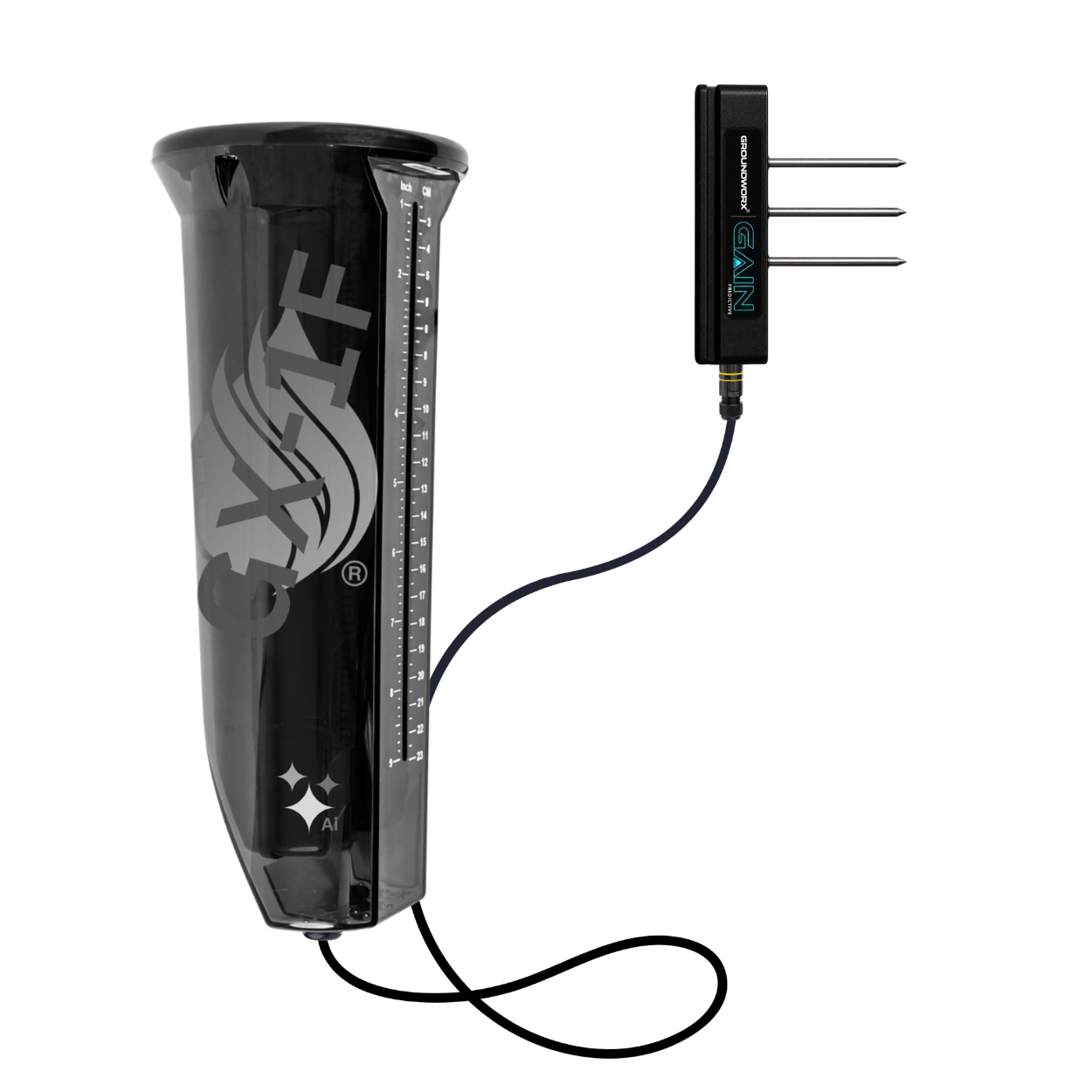
GX-1F iQ SmartWell Edition
This open configuration drops into the iQ SmartWell, sitting just under the surface with nothing visible above ground.
GX-1F iQ SmartWell Edition product sheet (PDF)Under development2-year warranty with iQ SmartWell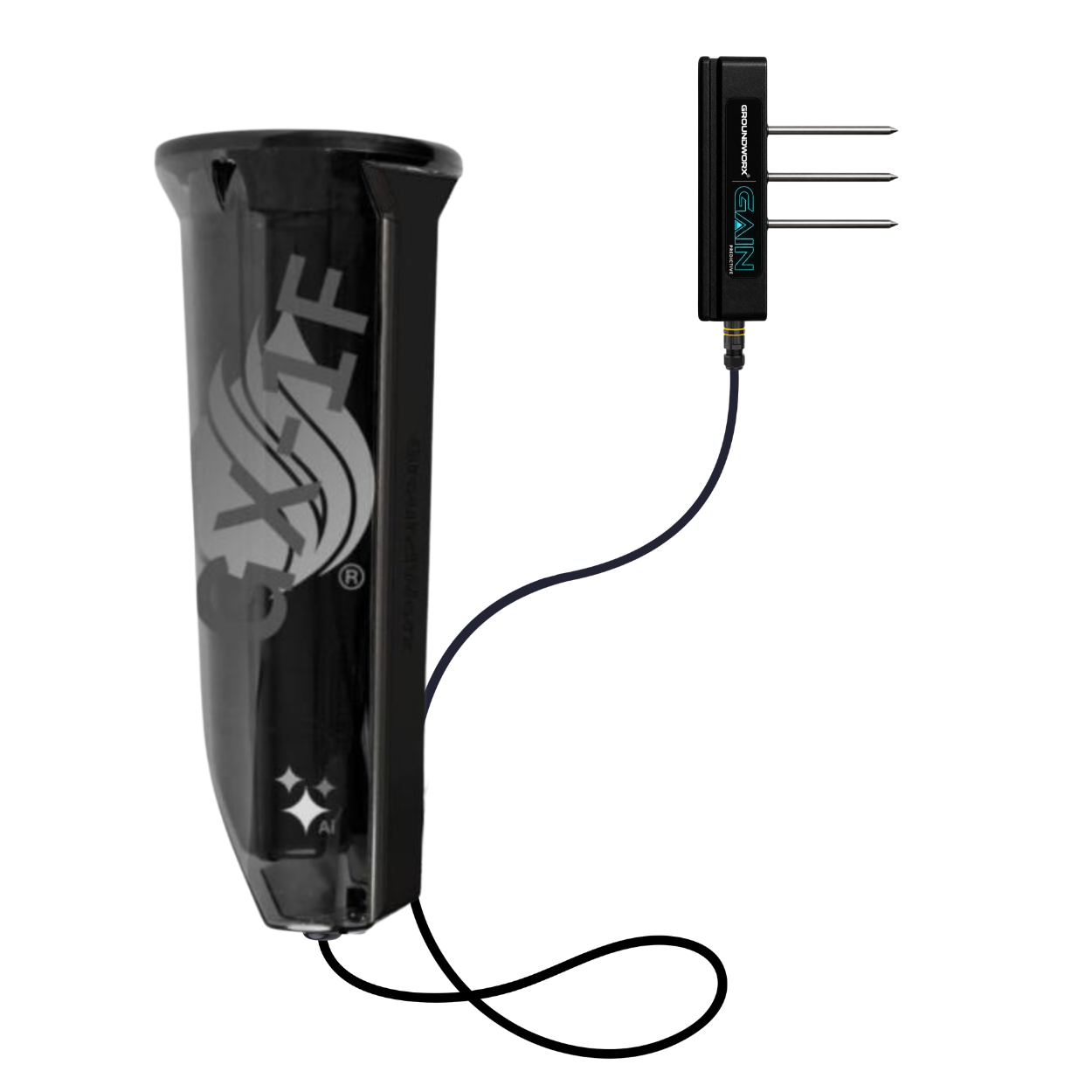
GX-1F (Flex-cord) sensor — standalone
The fully standalone, wireless configuration: buried directly in the vine row with no well required.
GX-1F product sheet (PDF)1-year warranty standaloneEnvironmental intelligence
Prototype · Under DevelopmentDesigned for open areas such as golf courses, agricultural fields and vineyards, connecting air, weather and root-zone conditions to day-to-day land management. It is distinct from Guardian SmartTower’s flood-and-fire focus and Fire Station’s deep-forest role.
The iQ Environmental SmartTower is built on the iQ Fire Station SmartTower platform with 30 data points tuned for the field — fire-only smoke, flame and fuel-moisture sensors removed — and streamlined communications for open farmland, vineyards and golf courses. Air quality, weather, evapotranspiration and two in-ground PURE Insight soil arrays report into GAIN from one autonomous 8 ft. tower.
Prototype under development. Specifications subject to change.
Open API
GAIN is built as an open, bidirectional platform. Root-zone telemetry streams out to any system you run, and context streams back in — irrigation run times, agronomic events, imagery, weather — so every prediction is made with the full picture. You own your data, and you can move it.
Read every reading, prediction, and recommendation out. Write irrigation events, maintenance activity, and third-party observations back in.
REST endpoints, webhooks, scoped API keys, and scheduled exports. If a platform speaks HTTP, GroundWorx can speak to it.
Raw and derived telemetry are exportable at any time, in open formats, to your own warehouse. No lock-in, no gatekeeping, no export fee.
Get started
Tell us about your site and we will walk through where sensors belong, what GAIN would watch, and what a first season looks like.