

October 9, 2026
Equestrian & Racing: Intelligence Beneath the Footing
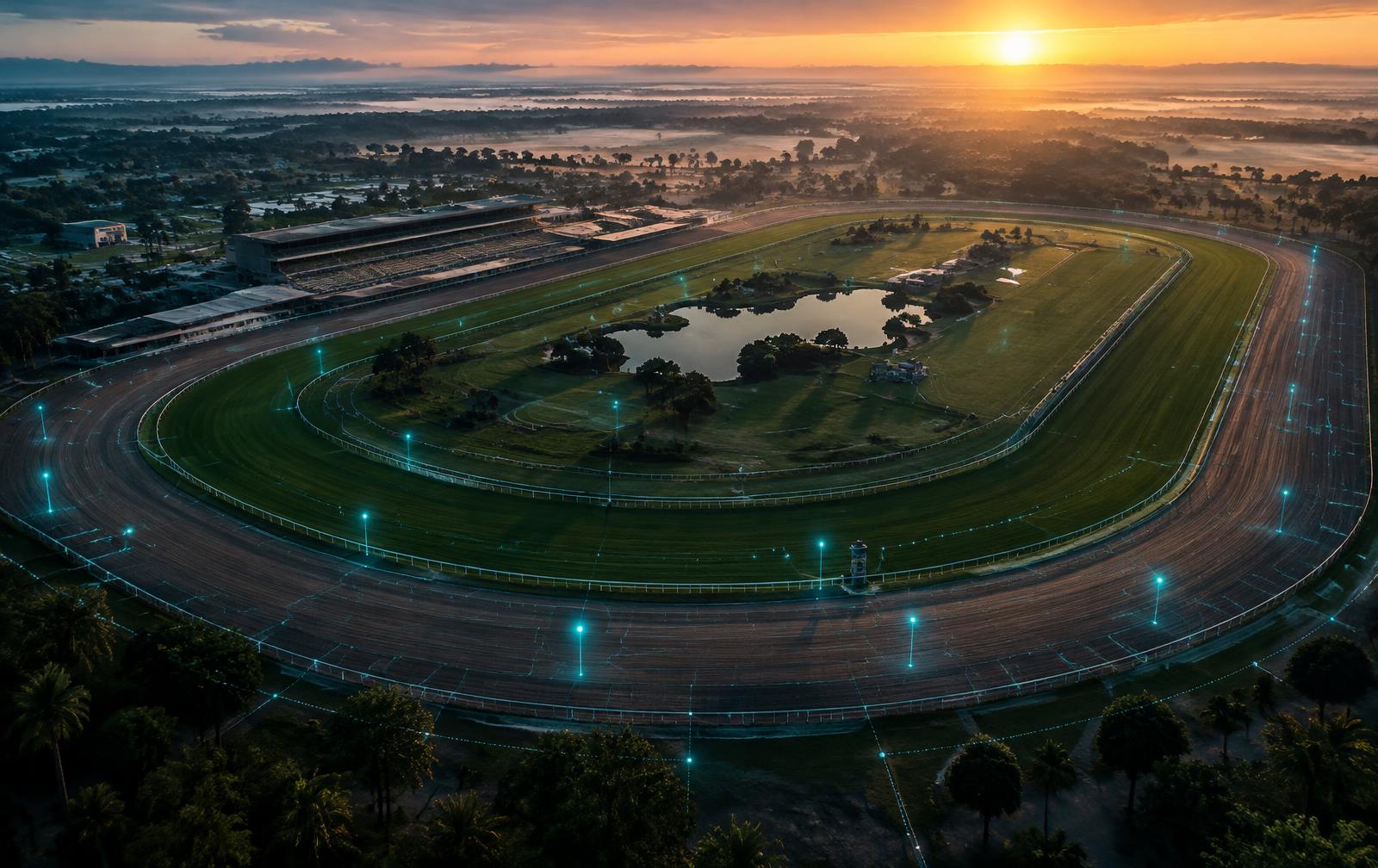
A racetrack is not one uniform surface. Neither is a training center, an arena, or a turf course. A watering decision that suits one section may not suit the next, and an apparently consistent surface can conceal different moisture conditions beneath it. For track superintendents and equine facility managers, understanding that variation is a practical starting point for more deliberate maintenance.
GroundWorx brings its below-surface sensing platform to Equestrian & Racing. GX-1 sensors collect moisture, temperature, and salinity observations every ten minutes. GAIN—the GroundWorx Autonomous Intelligence Network—combines those observations with site history and AI weather intelligence to support watering and maintenance recommendations. The goal is better evidence for the people responsible for the surface, not a replacement for their expertise.
Start by separating the questions each area needs to answer. On a dirt track or an arena, the team may need to understand how moisture changes between watering, preparation, and use. On a turf course, root-zone moisture and temperature inform irrigation and recovery planning. Paddocks, infields, and common turf areas have their own irrigation needs. Treating these areas as distinct monitoring zones is more useful than assuming one reading represents the entire property.
For track footing and sports surfaces, the GX-1S is the designated sensor in the GroundWorx lineup. The GX-1A (Adjustable) serves paddocks, infields, and common turf areas. Sensor placement should reflect the actual surface construction, irrigation zones, drainage differences, and maintenance equipment. Below-surface installation needs to be planned with the facility team so sensing positions remain clear of the working depth of harrows and other equipment. Suitability for a particular dirt or synthetic footing should be confirmed before deployment.
The value of repeated readings is the record they create. A single measurement captures one moment; a sequence helps a team compare what happened before and after rain, a water-truck pass, or an irrigation cycle. Monitoring contrasting locations can help reveal where moisture persists and where it declines sooner. Those patterns give operators a more specific question to investigate than whether the whole track simply looks dry.
GAIN adds context to that record. Its deep learning models are designed to learn each location's baseline, interpret changes alongside weather information, and flag developing anomalies. Forecast rainfall and evapotranspiration estimates can inform the next watering decision, while measured moisture helps the team check what actually happened below the surface. Recommendations remain decision support: operators review them against inspections, maintenance plans, and their knowledge of the facility.
On turf courses, the root zone deserves its own attention. Moisture and temperature observations can support recovery planning between race days and help teams identify areas that need closer inspection. These readings complement, rather than replace, formal going assessments and other surface-testing methods. A soil sensor does not directly measure traction, firmness, cushion depth, or the complete mechanical behavior of a racing surface.
Water conservation begins with distinguishing need from habit. Instead of treating every section as though it requires the same water-truck pass or irrigation duration, teams can use monitored conditions to identify where an adjustment may be justified. The result should be evaluated against the facility's own water records and operating requirements. GroundWorx does not promise a fixed savings percentage for equestrian facilities; consumption and achievable savings depend on surface materials, climate, scale, and current practices.
A useful operating record connects readings to actions. Note rainfall, watering, maintenance, and the team's observations, then compare the subsequent sensor trends. GAIN alerting and assignable field tasks can help direct attention to locations requiring a check. Over time, that record supports maintenance reviews and clearer conversations between grounds teams and management. It is not a safety certification, an injury-prevention guarantee, or a substitute for stewards' decisions and professional surface assessments.
SmartLocations can extend the learning workflow where site conditions support it. A sensor paired with an iQ SmartWell first establishes a measured baseline. Once a location becomes sufficiently predictable, the team can rotate hardware to sample other areas and periodically return for recalibration. A sensor-free SmartLocation is an AI prediction, not a live measurement. Variable or operationally critical positions may warrant ongoing sensing rather than relying on predictions alone.
A sensible first step is a facility-specific monitoring plan: identify contrasting track sections, relevant turf and paddock zones, the maintenance constraints, and the decisions the team wants to improve. Establish baselines, review the readings alongside existing inspections, and evaluate any watering changes before expanding. GroundWorx's Equestrian & Racing offering puts that process on a clearer foundation—intelligence beneath the footing, with experienced people in control.