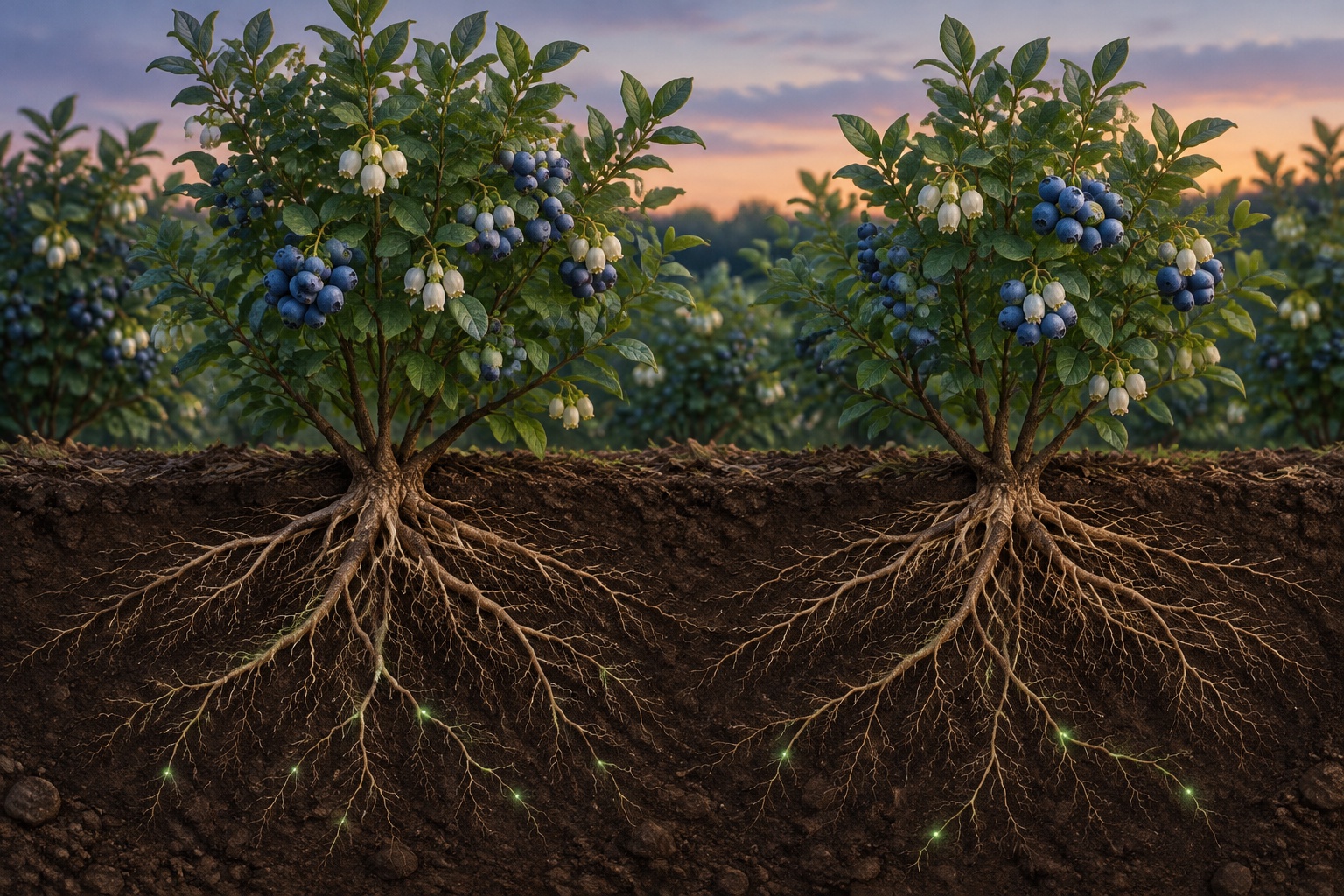
A blueberry smoothie connects a familiar fruit to a woody shrub. This story follows highbush blueberry, not every wild berry or every blueberry hybrid.
Illustrative crop · Roots are unscaled artistic interpretation, not measured depth or architecture · Not a GroundWorx customer site
The plant behind the cup
A shrub, not a tree
NC State describes highbush blueberry as a deciduous shrub native to eastern North America. Oregon State distinguishes northern highbush from southern highbush, lowbush and hybrid types; their regional suitability is not interchangeable.
Both guides describe acidic growing conditions and drainage as important. Oregon State describes shallow roots and sensitivity to water stress; no universal moisture trigger, root depth or watering amount is supplied here.
The edible berries are the fruit ingredient in blueberry drinks. This crop-to-cup story is not a recipe, nutrition comparison or food-preservation guide.
NC State places highbush blueberry’s native range in eastern North America. Oregon State distinguishes cultivated highbush types from wild relatives and regional hybrids. A plant range does not establish an invention date or birthplace for blueberry drinks.
Oregon State describes repeated picking of ripe fruit. The berries can become a blended drink ingredient; processing and safe storage need separate guidance.
The GX-1 Series angle · A managed highbush blueberry planting could pair location-specific soil moisture, temperature and electrical-conductivity records with crop stages, cultivar identity and weather. No verified GroundWorx blueberry trial is available in the reviewed project evidence; no placement depth, predictive accuracy, water savings, health benefit or beverage-quality guarantee is claimed.
A root-zone record adds context beneath the crop: soil moisture, temperature and electrical conductivity at the measured location. Growers can consider that history alongside weather, field observations and their own agronomic advice.
These crop features are research context—not demonstrated crop performance, a sensor deployment prescription or a promise of beverage quality or yield.