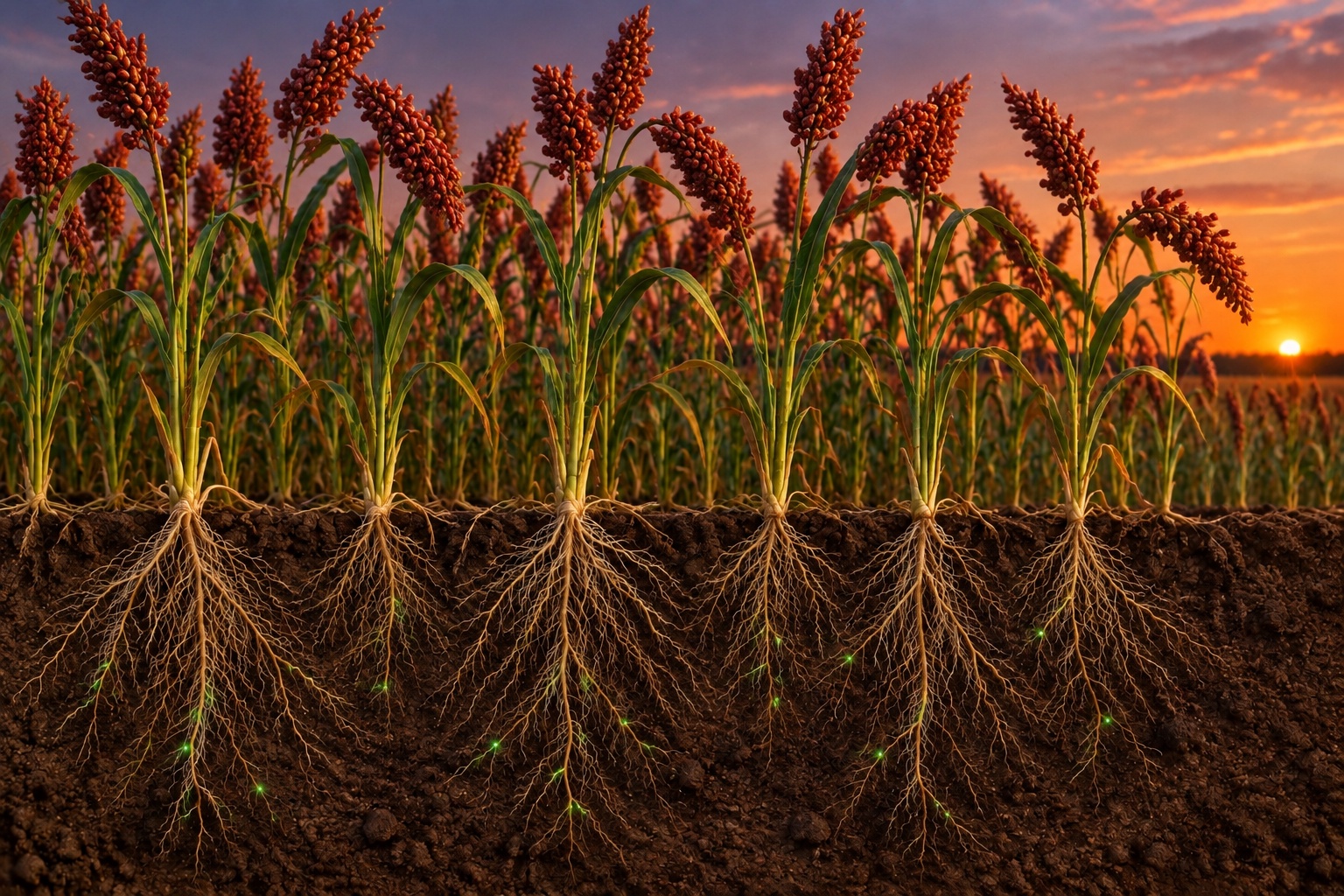
Many Chinese baijiu styles begin with grain sorghum. Researchers describe a solid-state fermentation of grain with a jiuqu starter, so the field crop and the microbes both shape the spirit.
Illustrative sorghum · Roots are unscaled artistic interpretation, not measured depth or architecture · Not a GroundWorx customer site
The plants behind the pour
Grain plus a starter culture
A Frontiers in Microbiology review describes baijiu as made through two solid-state fermentation processes, jiuqu making and baijiu making, with bacteria, yeasts and molds involved. Styles vary by region, process and starter.
A Journal of Food Composition and Analysis review examines how sorghum grain composition relates to baijiu quality. That is grain-chemistry research, not a field-moisture or GroundWorx result.
NC State Extension lists sorghum as a heat- and drought-tolerant warm-season grass. Red sorghum is less attractive to birds; grain, forage and broomcorn types serve different uses.
Iowa State’s crop-improvement text describes sorghum as originating in northeastern Africa, probably domesticated in Ethiopia and parts of Congo about 5,000 years ago, with India, Sudan and Nigeria as secondary centers. It later spread into Asia, including China.
General crop stages; timing varies with variety, region and management.
01
Emergence in warm soil
K-State describes emergence timing depending on soil temperature, moisture, residue and planting depth, and advises emergence into warm soil with good moisture.
At growing-point differentiation the plant switches from leaves to forming a head; K-State notes adequate water and nutrients are critical through flag leaf and boot.
The GX-1 Series angle · A managed sorghum field could pair location-specific soil moisture, temperature and EC records with growth stages and weather. No verified GroundWorx sorghum deployment, root-depth target, yield gain or baijiu-quality improvement is claimed.
A root-zone record adds context beneath the crop: soil moisture, temperature and electrical conductivity at the measured location. Growers can consider that history alongside weather, field observations and their own agronomic advice.
These crop features are research context—not demonstrated crop performance, a sensor deployment prescription or a promise of beverage quality or yield.