Corn leads the mash
U.S. standards define bourbon as whisky produced from a fermented mash of not less than 51 percent corn, distilled within legal proof limits and stored in charred new oak containers.
Source ↗



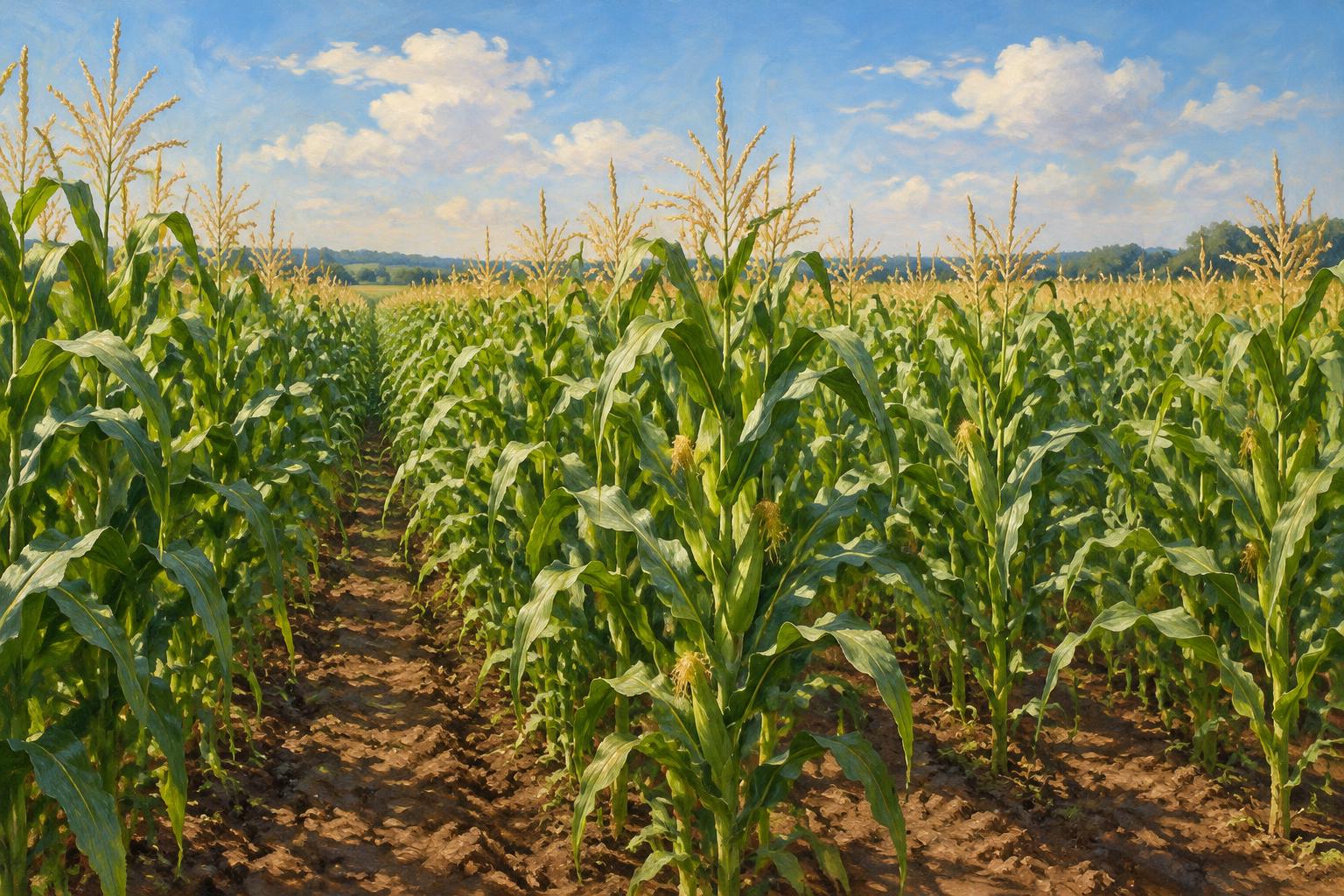
Zea mays · An annual grain
Before bourbon is a barrel, it is a field of grain. Federal rules require a mash of at least 51% corn, so every bottle starts with a crop that rises from seed to harvest in a single season.
Illustrative crop imagery · Not a GroundWorx customer site
U.S. standards define bourbon as whisky produced from a fermented mash of not less than 51 percent corn, distilled within legal proof limits and stored in charred new oak containers.
Source ↗Corn development is tracked in vegetative stages (emergence through tasseling) and reproductive stages (silking through physiological maturity).
Source ↗The silking stage is when pollination occurs; stress around this window has an outsized effect on the number of kernels each ear can set.
Source ↗General crop stages; timing varies with variety, region and management.
01
The seedling breaks the surface and early leaves collar.
02
The plant adds leaf stages as roots expand through the soil profile.
03
Tassels shed pollen as silks emerge—the pollination window.
04
Kernels fill and dry down to physiological maturity before harvest.
The GX-1 series angle · In grain ground, a GX-1A can record moisture, temperature and EC from planting through grain fill—especially through the pollination window—giving the grower a measured record beneath the canopy.
A root-zone record adds context beneath the crop: soil moisture, temperature and electrical conductivity at the measured location. Growers can consider that history alongside weather, field observations and their own agronomic advice.
These crop features are research context—not demonstrated crop performance, a sensor deployment prescription or a promise of beverage quality or yield.
Discuss a grower pilot