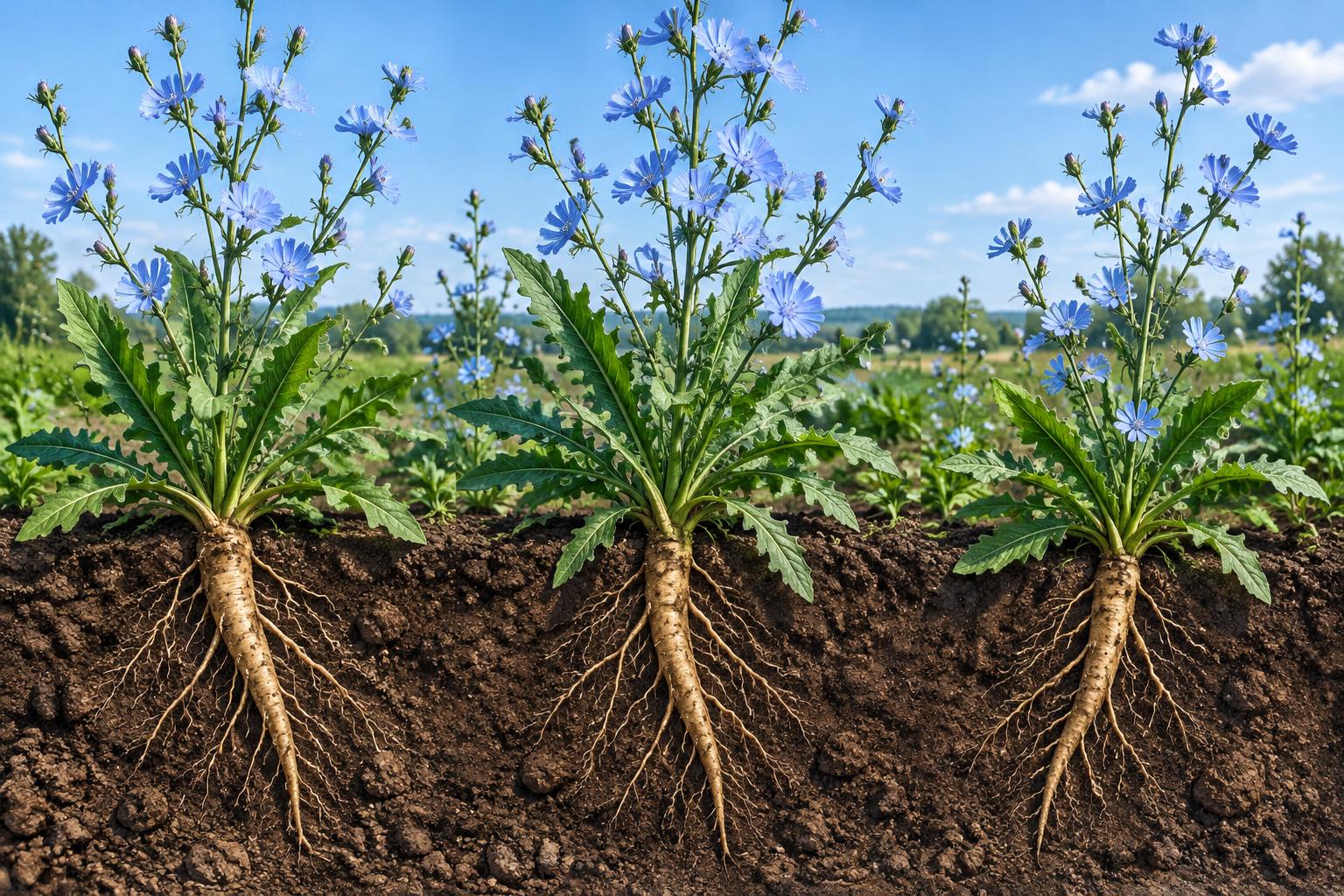
This plant-to-cup story begins below ground. Chicory roots are processed for coffee substitutes and coffee blends; the blue-flowered plant is not a coffee shrub, and its harvested root is not a coffee bean.
Illustrative chicory · Roots are unscaled artistic interpretation, not measured depth or architecture · Not a GroundWorx customer site
The plant behind the cup
A roasted root, not a seed
Arkansas Extension describes roasted chicory roots used in coffee blends. Wisconsin Extension documents processed roots used with coffee or as a substitute, including in New Orleans. A chicory-only drink and a blend containing coffee are different ingredient pathways.
Common chicory is Cichorium intybus, an herbaceous perennial with a fleshy taproot. Wisconsin distinguishes root-use types from leafy cultivated forms and from the related curly endive, Cichorium endivia. Not every crop called “endive” is the same plant.
Wisconsin describes cultivated chicory in deep, well-drained fertile soil. Vermont likewise describes a sunny site with well-drained soil. These are general growing conditions, not an irrigation threshold, a measured root depth or a worldwide planting prescription.
Wisconsin Extension describes common chicory as native to Europe, central Russia and western Asia and naturalized across much of North America and elsewhere. Arkansas documents its arrival from Europe and roasted-root coffee use in New Orleans. That plant range and regional drink tradition do not establish a single birthplace or invention date for chicory drinks.
General crop stages; timing varies with variety, region and management.
01
Seed & establishment
Chicory can be grown from seed. Vermont notes that transplanting can damage the taproot and describes direct sowing; local climate governs establishment timing.
The common perennial form initially makes a rosette of toothed leaves while its root system develops. This botanical cycle is not a commercial root-harvest schedule.
Wisconsin describes flowering stems in the second and subsequent seasons. Flowers usually appear blue; individual flowers last only a day. A root crop need not be presented as requiring a flowering harvest.
Roasted roots connect the harvested plant to a coffee-style drink. Arkansas documents their use in coffee blends; Wisconsin documents both blended and substitute uses. No home-roasting recipe or food-safety protocol is supplied here.
The GX-1 series angle · A managed chicory crop could pair location-specific soil observations with crop identity, growth stage and the grower’s field records. This is research context only—not a verified chicory deployment, a sensor-depth prescription, a health claim or proof of beverage quality.
A root-zone record adds context beneath the crop: soil moisture, temperature and electrical conductivity at the measured location. Growers can consider that history alongside weather, field observations and their own agronomic advice.
These crop features are research context—not demonstrated crop performance, a sensor deployment prescription or a promise of beverage quality or yield.