The cup around the flower
UF/IFAS describes the fleshy calyx at the base of the roselle flower. Calyces are used for herbal teas and other drinks; Rutgers also documents calyx and flower uses.
Source ↗



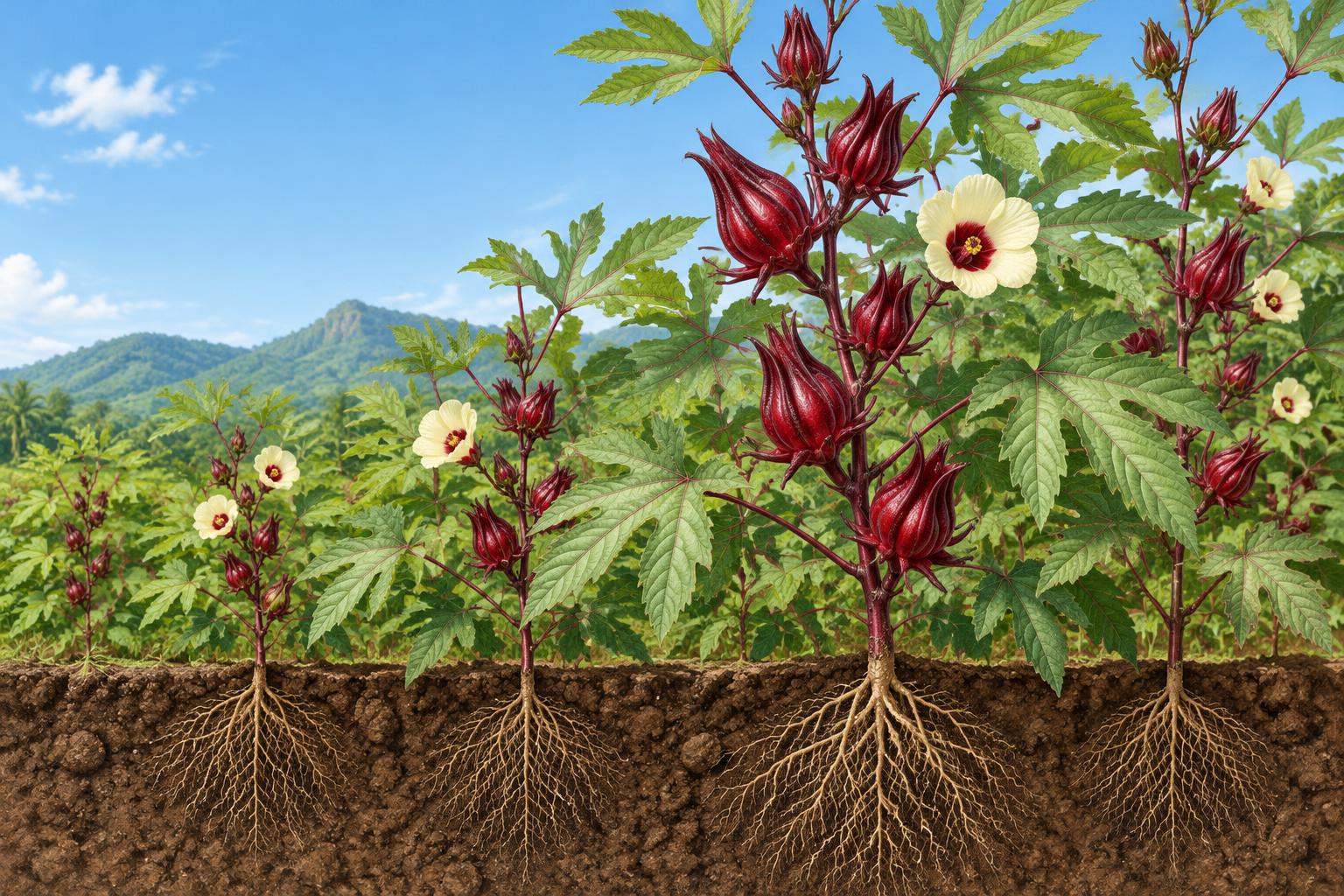
Hibiscus sabdariffa · Nonalcoholic plant infusion
The red part behind a familiar hibiscus infusion is roselle’s fleshy calyx, not simply its flower petals. Hibiscus sabdariffa connects gardens and drink traditions across regions; it is not a license to brew every ornamental hibiscus.
Illustrative roselle · Roots are unscaled artistic interpretation, not measured depth or architecture · Not a GroundWorx customer site
UF/IFAS describes the fleshy calyx at the base of the roselle flower. Calyces are used for herbal teas and other drinks; Rutgers also documents calyx and flower uses.
Source ↗Rutgers documents roselle drink uses in Thailand, Senegal and Nigeria. UF/IFAS describes its use in a festive Caribbean Christmas drink. These are examples, not a complete global inventory.
Source ↗Both sources describe flowering as days shorten. Rutgers notes that late-flowering roselle types can fail to mature outdoors under New Jersey conditions; a Florida calendar is not a worldwide harvest rule.
Source ↗Roselle Hibiscus sabdariffa
Roselle’s origin is not presented as settled: UF/IFAS describes Central and West African nativity, while Rutgers calls its origin uncertain and discusses Sudan or India–Malaysia. Its present drink traditions across several regions are distinct from that unresolved origin question.
Rutgers Cooperative Extension — FS1298: Roselle origin discussion ↗General crop stages; timing varies with variety, region and management.
01
Roselle can be raised from seed; UF/IFAS also describes cuttings. Establishment depends on local growing conditions.
Source ↗02
The plant builds lobed leaves and branches. Rutgers distinguishes harvests for leaves from production for flowers and calyces.
Source ↗03
Flowering responds to shorter days in the types described by the sources. Variety and climate affect whether the crop reaches this stage.
Source ↗04
UF/IFAS describes harvesting tender, plump calyces before they turn brown, and separating them from the seeds for use. This is crop context, not a full food-handling guide.
Source ↗The GX-1 series angle · A managed roselle planting could use soil observations alongside sunlight, rainfall and crop-stage records. This is research context only: no universal root depth, verified roselle deployment, health benefit or drink-quality guarantee is claimed.
A root-zone record adds context beneath the crop: soil moisture, temperature and electrical conductivity at the measured location. Growers can consider that history alongside weather, field observations and their own agronomic advice.
These crop features are research context—not demonstrated crop performance, a sensor deployment prescription or a promise of beverage quality or yield.
Discuss a grower pilot