One vodka ingredient, not the only one
Britannica describes vodka made from cereal grains and potatoes. This feature follows the potato pathway without implying that all vodka is potato-based.
Source ↗



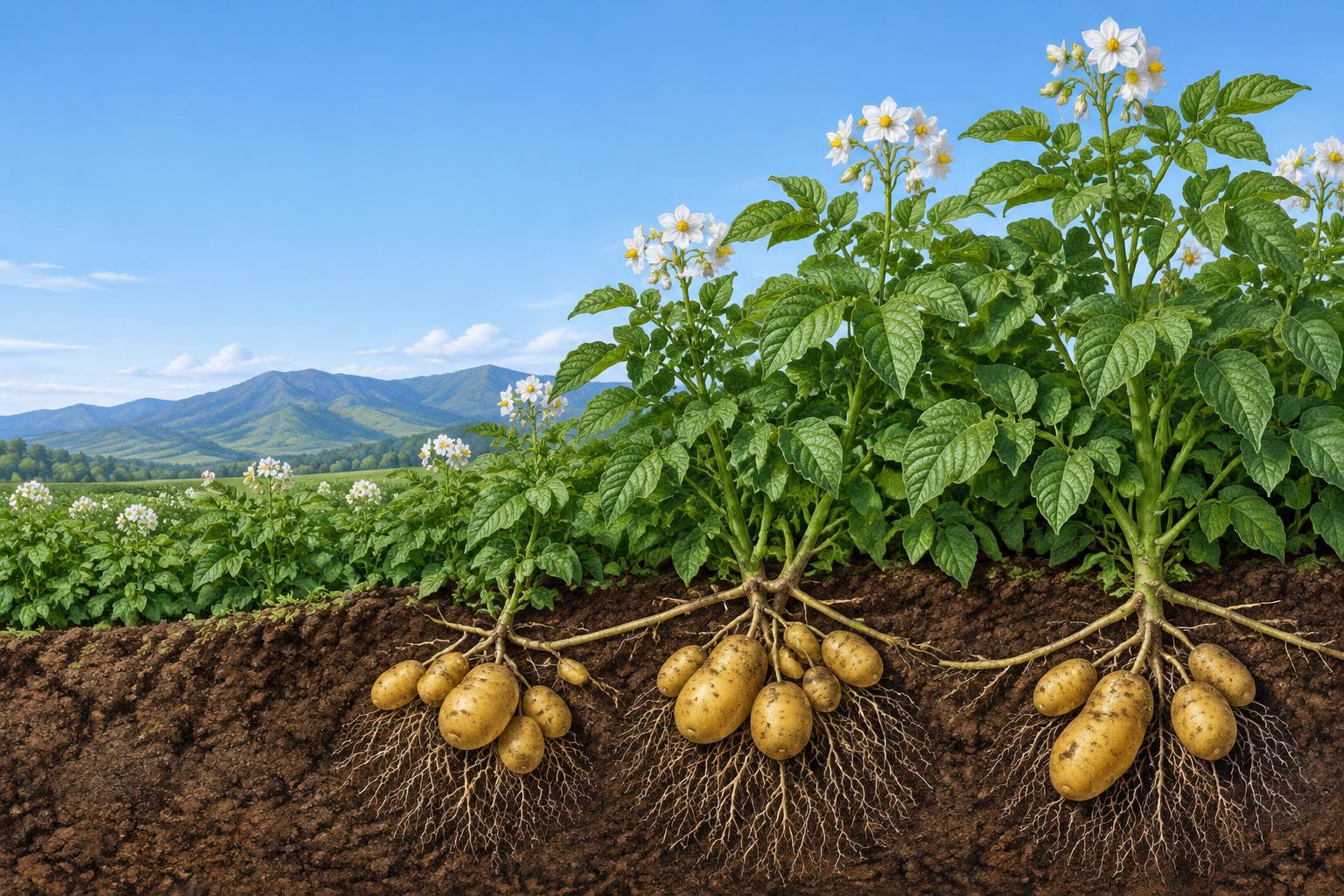
Solanum tuberosum · An Andean crop with a global story
Some vodka begins in a potato field. The crop’s story starts in the Andes, while the part harvested below ground is a stem tuber—not a root. Potato vodka is one ingredient pathway, not a definition of all vodka.
Illustrative potato imagery · Tubers and roots are unscaled artistic interpretation, not measured depth or architecture · Not a GroundWorx customer site
Britannica describes vodka made from cereal grains and potatoes. This feature follows the potato pathway without implying that all vodka is potato-based.
Source ↗The International Potato Center explains that starch moves to the ends of underground stems called stolons. Those stems thicken into tubers; the potatoes are not swollen roots.
Source ↗The International Potato Center links the number of tubers reaching maturity to available moisture and soil nutrients. This does not establish one irrigation threshold for every variety or field.
Source ↗Potato Solanum tuberosum
The potato originated and was first domesticated in the Andes of South America. Its global crop history is distinct from the debated origin of vodka; an Andean potato origin does not establish where potato vodka was first made.
International Potato Center — Potato Facts and Figures ↗General crop stages; timing varies with variety, region and management.
01
Buds, or “eyes,” on seed tubers produce shoots. Growing a crop from seed tubers is vegetative propagation, distinct from growing botanical seeds.
Source ↗02
Leaves manufacture starch, which is transferred to the ends of underground stolons.
Source ↗03
Stolons thicken into new tubers as the plant stores nutrients beneath the surface.
Source ↗04
Above-ground leaves and stems die down at the end of the growing season. Minnesota Extension distinguishes harvesting mature tubers after plants have dried from earlier new-potato harvests.
Source ↗The GX-1 series angle · For a managed potato field, GX-1 series observations could add a location-specific soil record alongside crop scouting. This is a research use case, not a verified potato deployment, a universal sensing depth or evidence of vodka quality.
A root-zone record adds context beneath the crop: soil moisture, temperature and electrical conductivity at the measured location. Growers can consider that history alongside weather, field observations and their own agronomic advice.
These crop features are research context—not demonstrated crop performance, a sensor deployment prescription or a promise of beverage quality or yield.
Discuss a grower pilot