A wine from rice
U.S. labeling rules treat sake as a wine produced from rice rather than grapes or other fruit.
Source ↗



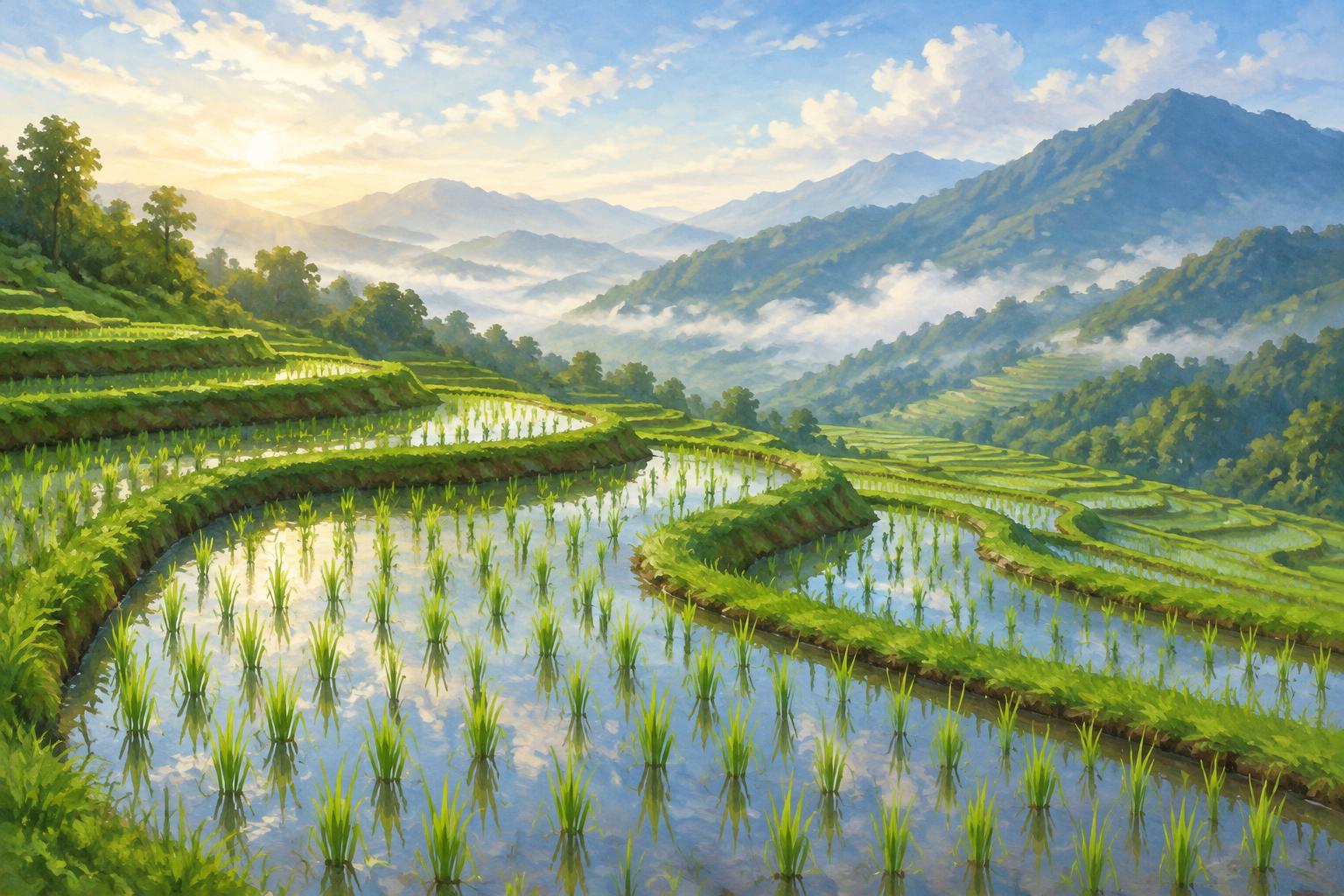
Oryza sativa · A water-grown grain
Sake begins as rice in a flooded field. It is brewed like a beer but taxed and labeled with the wines in the United States—either way, the story starts with a water-managed crop.
Illustrative crop imagery · Not a GroundWorx customer site
U.S. labeling rules treat sake as a wine produced from rice rather than grapes or other fruit.
Source ↗Paddy rice is grown in managed flooding; fields are flooded, then drained at key points in the season.
Source ↗Rice moves from germination and seedling growth through tillering, panicle initiation, heading and maturity.
Source ↗General crop stages; timing varies with variety, region and management.
01
Fields are prepared, seeded and flooded.
02
The plant produces additional shoots, building the stand.
03
The grain-bearing panicle forms, then emerges at heading.
04
Fields are drained for dry-down and harvest.
The GX-1 series angle · Paddy rice lives by managed water. A GX-1A in the field can log moisture, temperature and EC through flood and drain cycles, adding a measured record beneath a crop defined by water.
A root-zone record adds context beneath the crop: soil moisture, temperature and electrical conductivity at the measured location. Growers can consider that history alongside weather, field observations and their own agronomic advice.
These crop features are research context—not demonstrated crop performance, a sensor deployment prescription or a promise of beverage quality or yield.
Discuss a grower pilot