Diluted versus pot-distilled
Korea.net describes diluted soju as made from alcohol extracted from ingredients like sweetpotatoes, molasses and tapioca, and notes the government banned grain-distilled soju in 1965 during food shortages.
Source ↗



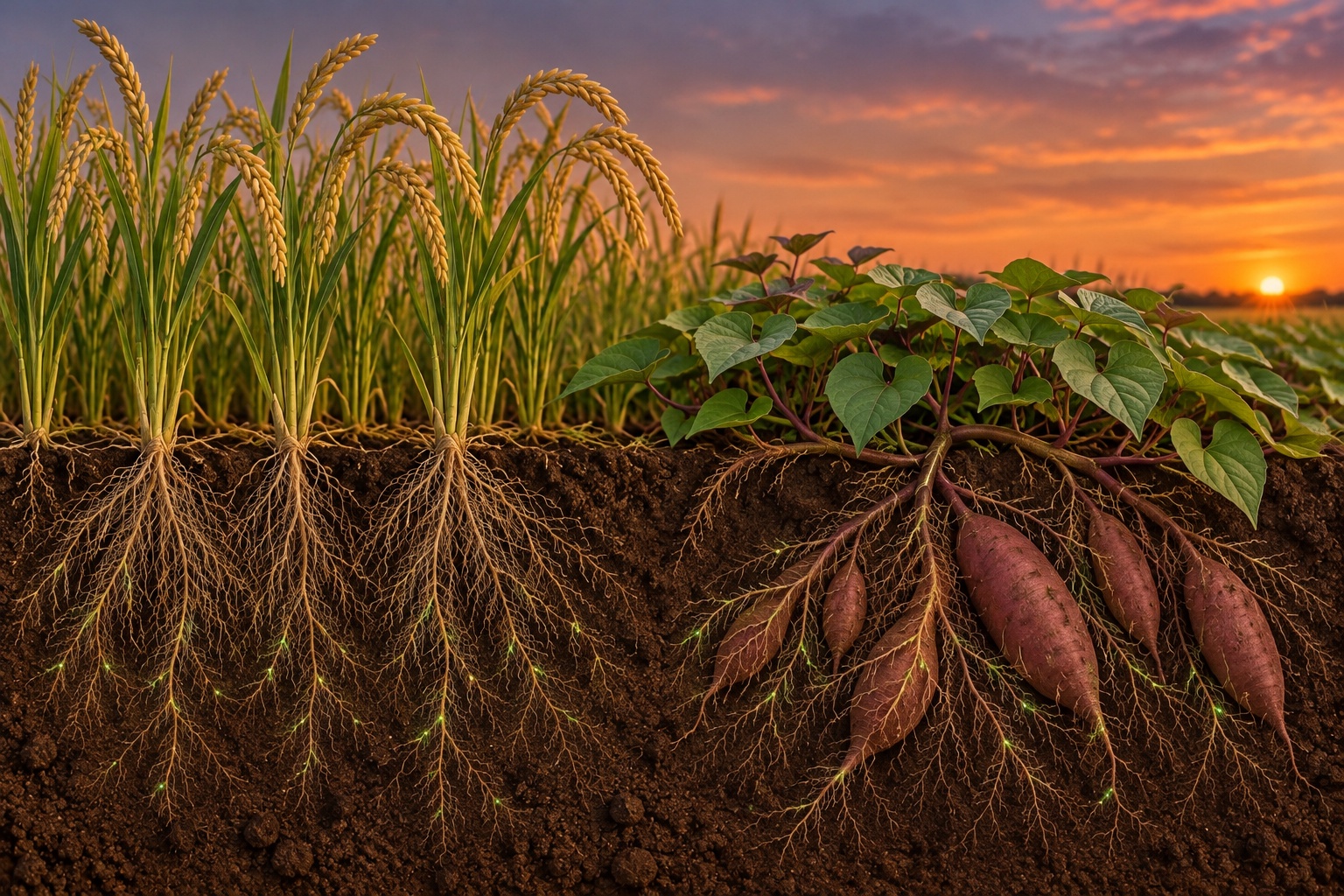
Oryza sativa · Ipomoea batatas · Starch crops
Soju is Korea’s best-known distilled spirit, but it has two very different pathways. Traditional pot-distilled soju is mainly rice-based; the familiar green-bottle diluted soju draws on starches such as sweetpotato, molasses and tapioca.
Illustrative crops · Roots are unscaled artistic interpretation, not measured depth or architecture · Not a GroundWorx customer site
Korea.net describes diluted soju as made from alcohol extracted from ingredients like sweetpotatoes, molasses and tapioca, and notes the government banned grain-distilled soju in 1965 during food shortages.
Source ↗A Korea Food Research Institute review traces soju to the 13th-century Koryo Dynasty and compares traditional batch pots with continuous columns.
Source ↗NC State Extension describes sweetpotato as a morning-glory family vine grown for edible storage roots, only distantly related to potato. It prefers loamy, well-drained soil and is frost-sensitive.
Source ↗Rice Oryza sativa
Archaeological finds support the first domestication of japonica rice, the type used for sake, in China's Yangtze River valley about 8,000–10,000 years ago. Researchers link rice farming to the rise of Yangtze River civilization.
Biodiversity Science — Rice domestication and the Yangtze River civilization ↗Sweetpotato Ipomoea batatas
The International Potato Center places sweetpotato’s origins in Latin America; Asia is now the largest producing region and China the biggest producer. NC State lists it as native to Mexico, Central America and northern South America.
International Potato Center — Sweetpotato Facts and Figures ↗General crop stages; timing varies with variety, region and management.
01
UC IPM organizes rice management around the flooded paddy season from planting to harvest; its California guidance is regional, not a Korean calendar.
Source ↗02
NC State notes sweetpotato is propagated from cuttings planted after the last frost and spreads by runners.
Source ↗03
The edible storage roots develop below ground while the vines cover the soil. Harvest timing depends on variety and site.
Source ↗04
Rice grain and sweetpotato roots become fermentable starch on separate pathways. This is crop-to-glass context, not a production process.
Source ↗The GX-1 Series angle · A sweetpotato bed or rice field could pair location-specific soil moisture, temperature and EC records with crop stages and weather. No verified GroundWorx rice or sweetpotato deployment, root-depth target, yield gain or soju-quality improvement is claimed.
A root-zone record adds context beneath the crop: soil moisture, temperature and electrical conductivity at the measured location. Growers can consider that history alongside weather, field observations and their own agronomic advice.
These crop features are research context—not demonstrated crop performance, a sensor deployment prescription or a promise of beverage quality or yield.
Discuss a grower pilot