One plant, many teas
Camellia sinensis leaves are processed into white, green, oolong and black teas.
Source ↗



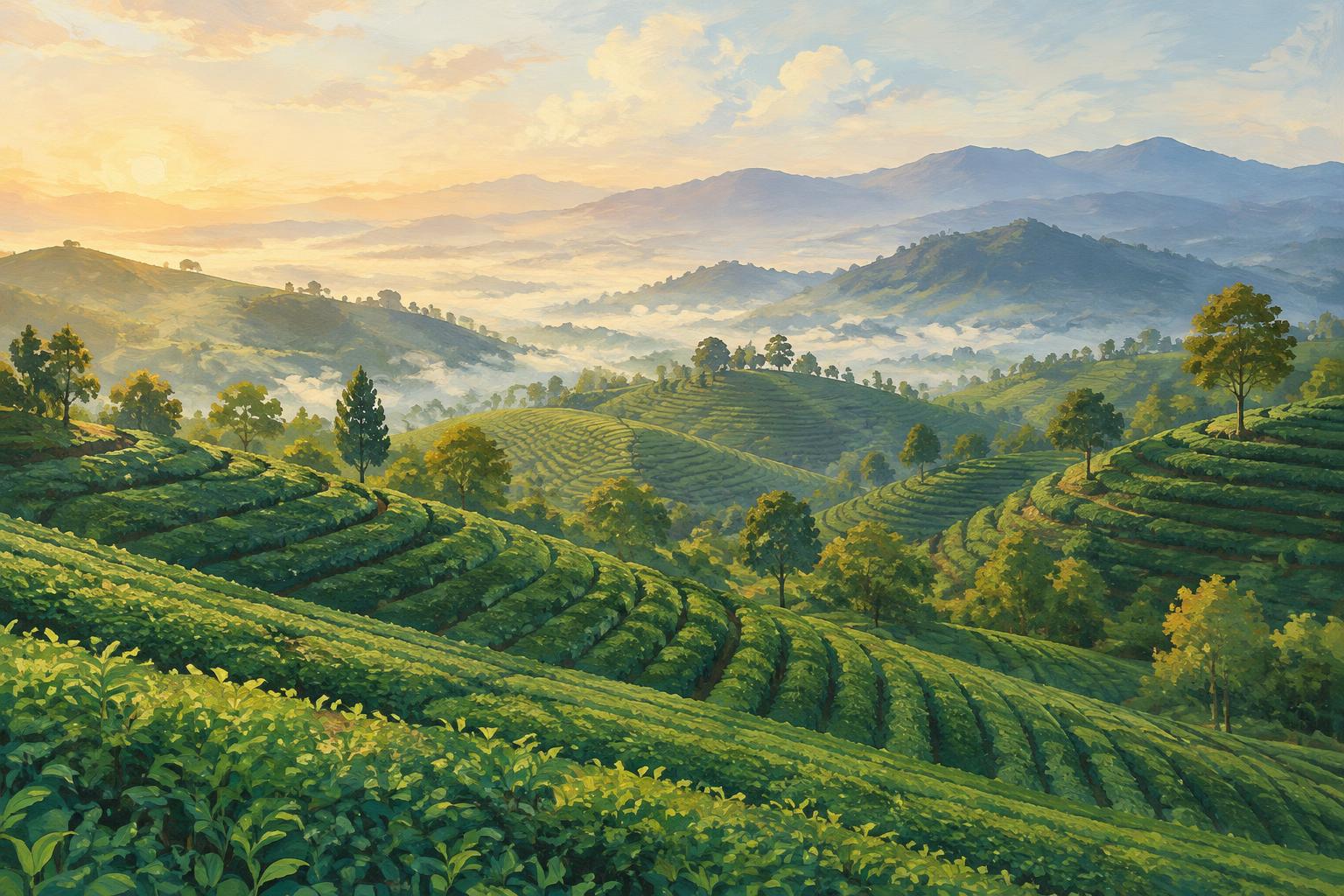
An evergreen shrub · Nonalcoholic
White, green, oolong and black tea all come from one evergreen plant. Harvest and processing shape the differences in the cup; the plant beneath them is the same.
Illustrative crop imagery · Not a GroundWorx customer site
Camellia sinensis leaves are processed into white, green, oolong and black teas.
Source ↗Leaves are harvested as they emerge in early spring.
Source ↗The tea camellia is an evergreen shrub or small tree—a perennial with a lasting root zone.
Source ↗General crop stages; timing varies with variety, region and management.
01
New leaves and buds emerge.
02
Young leaves are harvested as they appear.
03
Leaves become white, green, oolong or black tea.
04
The shrub keeps its leaves through the cooler season.
The GX-1 series angle · Tea rows are perennial evergreen shrubs, a natural fit for an invisible GX-1F buried beside the plant. It keeps a continuous root-zone record—moisture, temperature and EC—without equipment in the way of plucking.
A root-zone record adds context beneath the crop: soil moisture, temperature and electrical conductivity at the measured location. Growers can consider that history alongside weather, field observations and their own agronomic advice.
These crop features are research context—not demonstrated crop performance, a sensor deployment prescription or a promise of beverage quality or yield.
Discuss a grower pilot